PM-SETU Gains Momentum as MSDE Hosts Industry Leadership Conclave in Bhopal
PM-SETU Gains Momentum as MSDE Hosts Industry Leadership Conclave in Bhopal
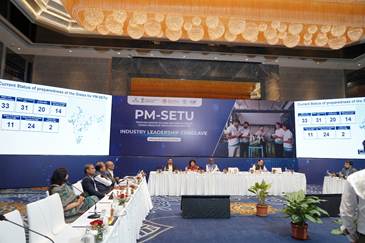
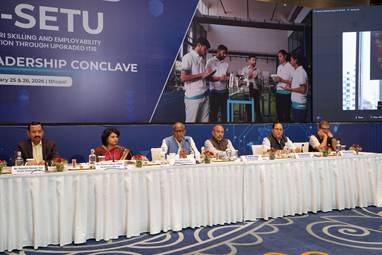
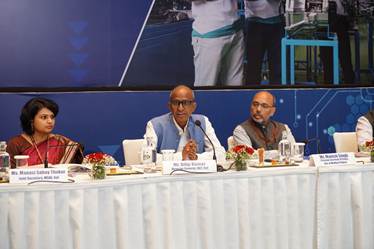
In a decisive step toward deepening industry participation in India’s skilling architecture, the Ministry of Skill Development and Entrepreneurship (MSDE) convened a high-level Industry Leadership Conclave on PM-SETU (Pradhan Mantri Skilling and Employability Transformation through Upgraded ITIs) in Bhopal on 25–26 February 2026. The two-day strategic consultation marks a critical milestone in embedding industry-led governance within the Industrial Training Institute (ITI) ecosystem and accelerating reforms aimed at making India’s training infrastructure globally competitive and demand-driven.
The Conclave was chaired virtually by Ms. Debashree Mukherjee, Secretary, MSDE, and witnessed the participation of the Director General, Directorate General of Training (DGT), the Principal Secretary (Skill Development), Government of Madhya Pradesh, and senior officials from the Governments of Madhya Pradesh, Odisha, Chhattisgarh, Rajasthan, and Gujarat.
Speaking on the occasion, Ms. Debashree Mukherjee, Secretary, MSDE, underscored that PM-SETU represents a structural reform that goes beyond incremental upgrades. She emphasized that the scheme places industry at the centre of governance by empowering partners to take leadership in designing, managing, and delivering training across adopted ITI clusters. The reform, she noted, seeks to align skilling outcomes with real-time industrial demand, ensuring that graduates are employment-ready and future-ready.
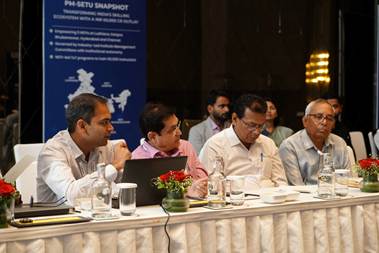
More than 20 leading industry players participated in the Conclave, including ArcelorMittal, BHEL, CREDAI, ITC Limited, Mahanadi Coalfields Limited, Motherson Group, Tata Power Skill Development Institute, and UltraTech Cement, among others.
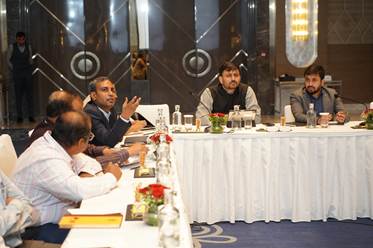
Industry leaders described PM-SETU as a timely and transformative reform that provides employers the flexibility to co-create curricula, deploy modern equipment, restructure institutional clusters, and embed global best practices in training delivery. They viewed the initiative as a significant opportunity to build a steady, high-quality talent pipeline while addressing persistent skill shortages across core sectors such as manufacturing, construction, energy, infrastructure, and advanced technologies.
The consultation served as a pivotal platform to translate the Prime Minister’s vision of a future-ready, globally competitive, and industry-integrated skilling ecosystem into actionable partnerships. Deliberations focused on governance frameworks, cluster restructuring, funding models, industry incentives, and mechanisms for outcome-based accountability.
The scheme is currently in the preparatory and phased rollout stage. The National Steering Committee has been constituted and guidelines approved. So far, 33 States and Union Territories have identified ITI clusters for upgradation, 31 have formed State Steering Committees, and 14 have floated Expressions of Interest or Requests for Proposal to select Industry Partners.
Parallel efforts are underway to internationalize India’s technical training ecosystem through strategic collaborations for National Centres of Excellence. A Letter of Intent has been signed with France for establishing a Centre of Excellence in Aeronautics at NSTI Kanpur. A Joint Declaration of Intent has been concluded with Germany for collaboration in the renewable energy sector at NSTI Hyderabad. Additionally, an MoU has been signed with Singapore for setting up a National Centre of Excellence in Advanced Manufacturing at NSTI Chennai. These partnerships aim to bring global standards, advanced technologies, and cross-border expertise into India’s skill development landscape.
Institutional capacity building has also commenced in parallel. As part of leadership strengthening initiatives, 100 ITI Principals from 27 States and Union Territories have already undergone specialized leadership training to enhance institutional governance, industry engagement, and operational readiness under the PM-SETU framework.
The Bhopal Conclave signals strong industry confidence in PM-SETU and reinforces MSDE’s commitment to transforming ITIs into globally competitive, industry-integrated institutions that power India’s growth and employability agenda.