National Workshop on One Health organised in Nagpur on “Operational Frameworks for One Health: National Vision and State Action”
National Workshop on One Health organised in Nagpur on “Operational Frameworks for One Health: National Vision and State Action”
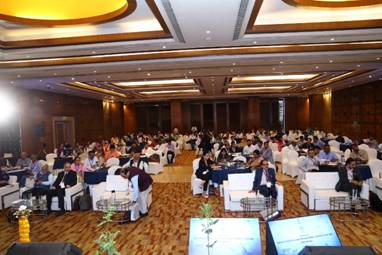
National Institute of One Health (NIOH), Nagpur, under the Department of Health Research (DHR), Ministry of Health and Family Welfare, in collaboration with the ICMR-RMRC, Bhubaneswar organized a two-day national workshop themed “Operational Frameworks for One Health: National vision and state action”. The workshop aimed to translate the vision of the National One Health Mission (NOHM) into actionable strategies, enabling coordinated implementation at the state and local levels.
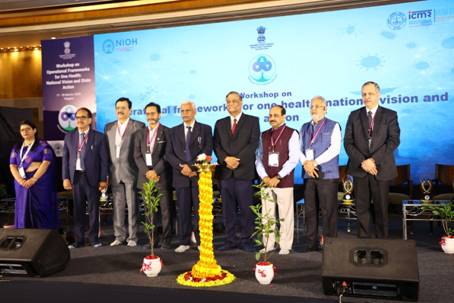
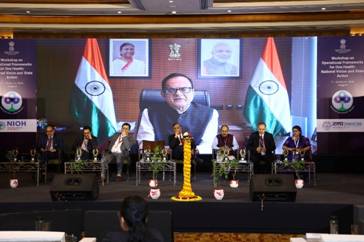
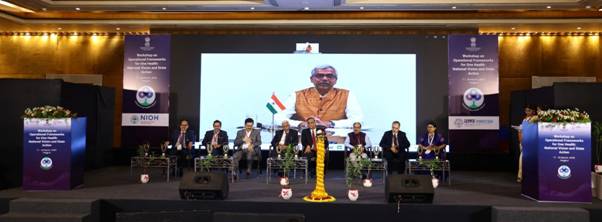
The inaugural session of the workshop featured the keynote address by Prof. Ajay Sood, Principal Scientific Advisor (PSA) to the Government of India. Dr. Rajiv Bahl, Secretary, Government of India, Department of Health Research and Director General, Indian Council of Medical Research virtually delivered the special address on this occasion. Dr. Naveena. B. Maheswarappa, Animal Husbandry Commissioner, DAHD, New Delhi addressed the gathering virtually. Prominent dignitaries that graced the inaugural session included Dr. Niteen Patil, Vice Chancellor, MAFSU Nagpur (Chief Guest), Dr. Prashant P. Joshi, Executive Director AIIMS, Nagpur (Guest of Honour), Dr. Ranjan Das, Director, NCDC, New Delhi (Guest of Honour), Dr. Deepak Mhaiskar (I.A.S), Chairman, SEIAA, Maharashtra, and Dr. Satish Raju, Regional Joint Commissioner of Animal Husbandry Dairying, Nagpur and Dr. Pragya Yadav, Director In-charge, NIOH, Nagpur.
Delivering his Keynote Address virtually, Prof. Ajay Sood emphasized the urgency of integrated surveillance. He stated, “One Health is not just a concept, but the foundation of our national health security and future pandemic preparedness. Maharashtra has the capacity to become a model for structured One Health implementation, demonstrating how policy, science, and governance can align effectively. Human health surveillance, veterinary disease reporting, wildlife monitoring, and environmental intelligence must move beyond parallel systems and become interoperable to ensure early warning which depends on seamless data flow across departments.”
Speaking virtually on the occasion, Dr. Rajiv Bahl highlighted the Mission’s architecture and the importance of inter-sectoral coordination in pandemic readiness. He remarked, “The National One Health Mission exemplifies a whole-of-government approach in tackling zoonotic threats and strengthening medical countermeasures. Our ecological diversity and close human-animal interactions create complex health interfaces where new threats can emerge. Strengthening our ability to manage these risks through the coordination of scientific institutions, government departments, and technical partners is an essential pillar of national health security.” He further stressed the need for state and district level outbreak response teams.
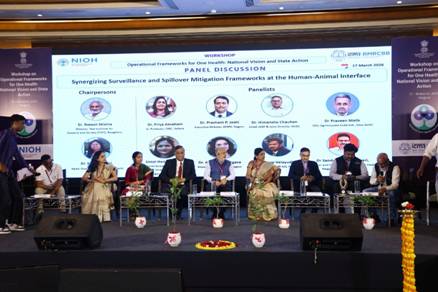
The two-day workshop explored the complex landscape of zoonotic diseases and spillover risks. The first day featured technical sessions and panel discussions focused on operationalizing the One Health approach. The second day centered on biothreat preparedness, the development of medical countermeasures, and investigations into wildlife-related outbreaks.
.
***