MSDE Organises Jan Shikshan Sansthan Zonal Conference-cum-Stakeholder Consultation & Progress Review Workshop in Bhopal
MSDE Organises Jan Shikshan Sansthan Zonal Conference-cum-Stakeholder Consultation & Progress Review Workshop in Bhopal
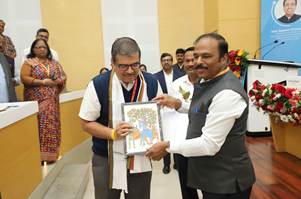
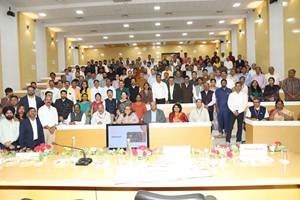
The Ministry of Skill Development and Entrepreneurship (MSDE) organised a two-day Jan Shikshan Sansthan (JSS) Zonal Conference-cum-Stakeholder Consultation and Progress Review Workshop on 26–27 February 2026 at RCVP Noronha Academy of Administration, Bhopal, Madhya Pradesh. The workshop brought together 143 Jan Shikshan Sansthans (JSSs) from across the country along with representatives from State Governments, TRIFED, NIESBUD, banking institutions, District Industries Centres, industry partners and other stakeholders.
The conference served as a structured national platform to review the physical and financial progress of JSSs during the current financial year and to assess implementation under initiatives including DAJGUA. It also provided an opportunity for stakeholder consultations aimed at strengthening governance mechanisms, improving convergence and aligning the scheme more closely with measurable livelihood outcomes.
The Jan Shikshan Sansthan Scheme, a fully funded Central Sector Scheme of the Government of India, provides non-formal, community-based vocational training to non-literate, neo-literate and school dropout youth and adults, with a strong focus on women and disadvantaged sections including SCs, STs, OBCs, minorities and other marginalized groups. Since FY 2018-19 till 31 December 2025, more than 34 lakh beneficiaries have been trained under the Scheme, of which 83 percent are women. The Scheme is currently implemented through 294 JSSs across the country, delivering training in 51 NSQF-aligned job roles.
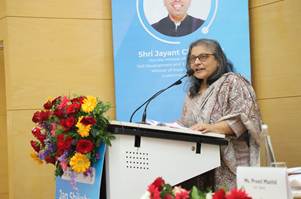
Addressing the participants, Ms. Debashree Mukherjee, Secretary, Ministry of Skill Development and Entrepreneurship, Govt of India said, that JSS exemplifies how skilling must be locally relevant, socially inclusive and outcome-oriented. The strength of the Scheme lies in its community connect and its ability to reach the unreached. Going forward, our focus will be on strengthening convergence, enhancing employability outcomes and ensuring that every district leverages JSS as a catalyst for inclusive economic growth.
The event was graced by Ms. Manasi Sahay Thakur, IAS, Joint Secretary, Ministry of Skill Development and Entrepreneurship; Shri Preeti Maithil, IAS, General Manager, TRIFED, Dr. Shivani Dey, Director, NIESBUD, Shri Indu Bhushan Lenka, Deputy Secretary and Shri Harsh Vardhan Sharma, Deputy Director from MSDE, whose presence underscored the importance of Centre–State collaboration and tribal convergence in strengthening grassroots skilling initiatives.
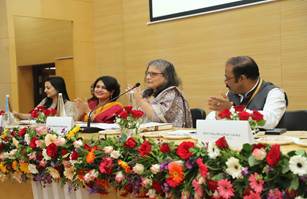
The workshop included technical sessions focused on employability and entrepreneurship, market readiness and packaging standards, convergence with tribal livelihood initiatives, and strengthening credit linkages for beneficiaries. A dedicated session by NIESBUD highlighted the importance of employability skills, while discussions with industry and institutional partners like Amazon Saheli, focused on improving product quality, packaging, e-commerce readiness and access to formal finance. A multi-stakeholder panel discussion involving District Industries Centres, Lead Banks, JSS representatives and beneficiaries examined practical pathways for strengthening local convergence and enterprise support.
Shri Sukumar Mandal, Joint Director, Skill Department, Govt of Madhya Pradesh and Smt. Rita Singh, Additional Director, Tribal Department, Government of Madhya Pradesh, also participated in the panel discussion and provided valuable inputs on strengthening institutional linkages, convergence mechanisms and livelihood integration at the district level.
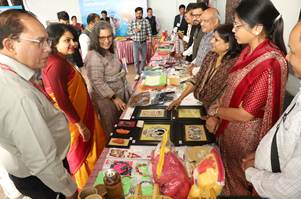
An exhibition of JSS products was also organised on the sidelines of the workshop, showcasing grassroots innovation, traditional crafts and locally developed products, reinforcing the scheme’s emphasis on sustainable livelihoods and market integration.
A key reform highlighted during the conference was the operationalisation of a live, evidence-based Livelihood Cell module on the Skill India Digital Hub (SIDH). This digital integration enables structured tracking of beneficiary outcomes including wage employment, self-employment, micro-enterprise development, SHG linkages, credit facilitation, participation in job melas and exhibitions, and documented income impact
The integration of enrolment, attendance, certification and livelihood monitoring on SIDH strengthens transparency, accountability and outcome measurement within the JSS ecosystem.
The deliberations were aligned with the vision of the Prime Minister for an inclusive and self-reliant Viksit Bharat, where skilling serves as a pathway to dignity and social mobility. Under the guidance of the Minister of State (Independent Charge), MSDE and Minister of State for Education, Shri Jayant Chaudhary, the Ministry continues to strengthen community-based skilling models, deepen digital integration and promote convergence with complementary schemes.
Over the years, JSS has emerged as a strong last-mile skilling model with notable achievements. Training is delivered at the doorstep through 30–35 sub-centres per district, ensuring outreach to rural, tribal, border, LWE and aspirational districts. Each JSS trains approximately 1,800 beneficiaries annually in locally relevant job roles. The entire training life cycle—enrolment, training, assessment and certification—is now integrated on the Skill India Digital Hub (SIDH) portal with Aadhaar-based e-KYC and biometric face authentication, enhancing transparency and accountability. Beneficiaries receive NCVET-recognised certificates, strengthening credibility and market recognition of acquired skills. Dedicated Livelihood Cells within each JSS facilitate employability skills, SHG and credit linkages, wage and self-employment opportunities, and post-training support.
The outcomes of the Bhopal workshop are expected to further strengthen implementation frameworks, enhance convergence and market integration, and reinforce the effectiveness of the JSS Scheme during FY 2025–26.