Jal Sanchay Jan Bhagidari: How Korea’s 5% Model Turned Water Scarcity into Water Security
Jal Sanchay Jan Bhagidari: How Korea’s 5% Model Turned Water Scarcity into Water Security
In a time when water scarcity is emerging as one of the most pressing climate challenges, Korea district of Chhattisgarh has demonstrated that the most powerful solutions do not begin with large dams or heavy machinery; they begin with people.
Through the spirit of Jal Sanchay Jan Bhagidari, the district transformed a vulnerable landscape into a model of resilience by asking a simple yet revolutionary question:
What if every farmer voluntarily dedicates just 5% of their land to water?
The 5% Model: Small Commitment, Transformational Impact
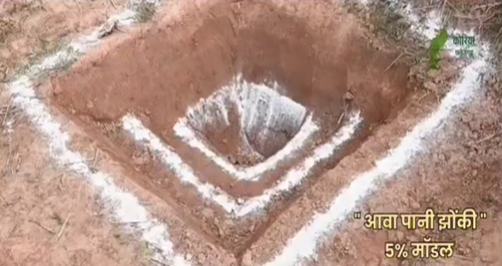
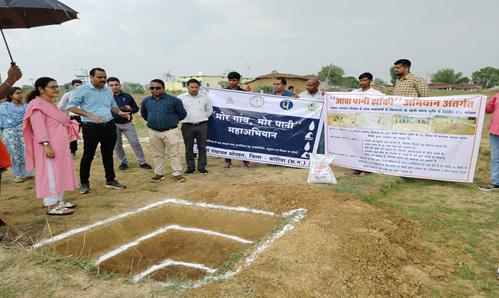
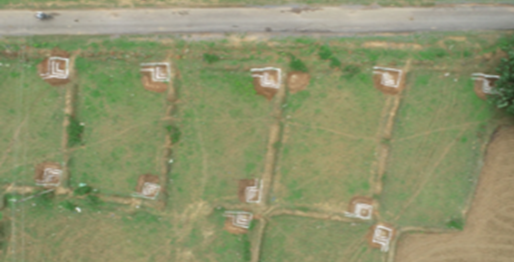
Under the Aawa Paani Jhoki movement, farmers voluntarily set aside 5% of their agricultural land to construct small recharge ponds and terraced pits. These structures capture rainwater directly within fields, ensuring that every monsoon drop is retained, absorbed, and reused.
The results have been remarkable:
· Rainwater that once flowed away now recharges the soil and aquifers
· Soil erosion has reduced significantly
· Crop moisture levels have improved during dry spells
· Groundwater recharge has become steady and sustained
This model proves that sustainable water management does not require large-scale displacement or heavy capital investment. It requires collective will.
Community Mobilisation Driving the Movement
The campaign drew strength from widespread community participation. Women emerged as ‘Neer Nayikas’, guiding households and leading soak pit construction while spreading awareness through traditional folk songs. Youth volunteers, known as ‘Jal Doots’, energized the movement by mapping trenches, desilting canals, and organizing street plays and wall art to promote water conservation. Collective shramdaan revived more than 440 traditional ponds, restoring them as natural recharge sources. Inspired by the movement, over 500 beneficiaries of the Pradhan Mantri Awas Yojana also constructed soak pits beside their homes, transforming water conservation from a government initiative into a shared community responsibility.
From Participation to Ownership
The success of the 5% Model lies not merely in infrastructure but in ownership. Adopted through Gram Sabha resolutions and supported by scientific planning, the initiative became a true people’s movement.
Over 1,260 farmers adopted the 5% recharge system on their own land. More than 2,000 soak pits were created across the district. Beneficiaries under rural housing schemes voluntarily added soak pits beside their homes, integrating water recharge into daily life.
In a historic demonstration of collective action, communities constructed 660 soak pits within just three hours, symbolizing the strength of coordinated public participation.
Measurable Environmental and Social Gains
The impact of Jal Sanchay Jan Bhagidari has been visible and quantifiable:
· Groundwater levels have risen by 3 to 4 meters in many villages
· Springs have revived in 17 remote tribal hamlets
· Agricultural productivity has improved due to better soil moisture retention
· Seasonal migration has reduced by an estimated 25% as livelihoods stabilized
Water security has strengthened economic security.
Science Meets Community Spirit
The district administration supported the initiative through micro-watershed mapping, hydrogeological assessments, and technical guidance. This ensured that each structure was strategically located for maximum recharge efficiency. Yet the driving force remained community leadership. The convergence of scientific planning and public participation created a sustainable governance model.
The District Collector of Korea stated, “This initiative is not just about structures. It is about securing the future of our farmers, reducing migration, and ensuring that every village has dependable water. Korea will continue to build on this momentum and set new benchmarks for sustainable development.”
A Replicable Blueprint for India
The Korea 5% Model demonstrates that climate adaptation can be decentralized, affordable, and participatory. It shows how Jal Sanchay Jan Bhagidari can convert water conservation from a departmental mandate into a shared civic responsibility.
By giving just 5% of their land, communities secured 100% of their water future.
Korea district did not wait for scarcity to dictate its fate. It responded with unity, innovation, and belief in collective action.
This Korea 5% Model clearly demonstrates that when communities come together to conserve water, the resource can be sustained for the future.