India Moving from Healthcare Follower to Global Leader in Precision Medicine and Biomanufacturing, says Union Minister Dr Jitendra Singh
India Moving from Healthcare Follower to Global Leader in Precision Medicine and Biomanufacturing, says Union Minister Dr Jitendra Singh
India is entering a transformative phase where cutting-edge biotechnology, genomics and multi-omics research are reshaping the future of healthcare, positioning the country as a global hub for precision medicine, biomanufacturing and medical innovation, said Union Minister of State (Independent Charge) for Science & Technology, Earth Sciences and MoS PMO, Personnel, Public Grievances, Pensions, Atomic Energy and Space Dr. Jitendra Singh.
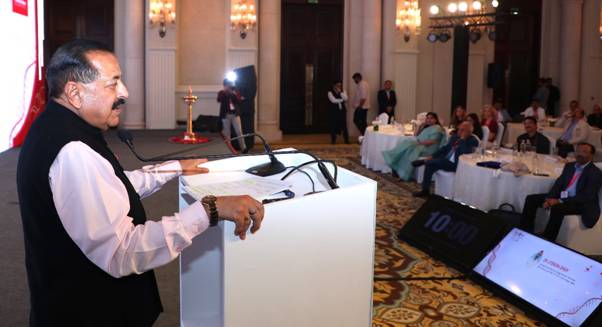
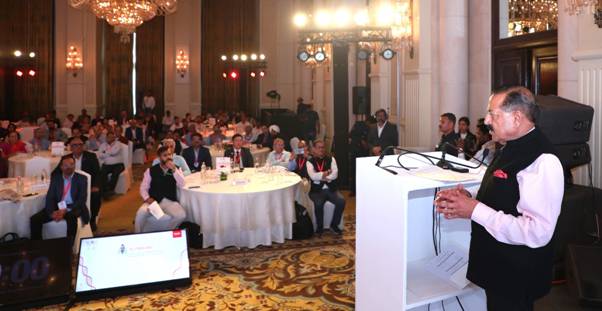
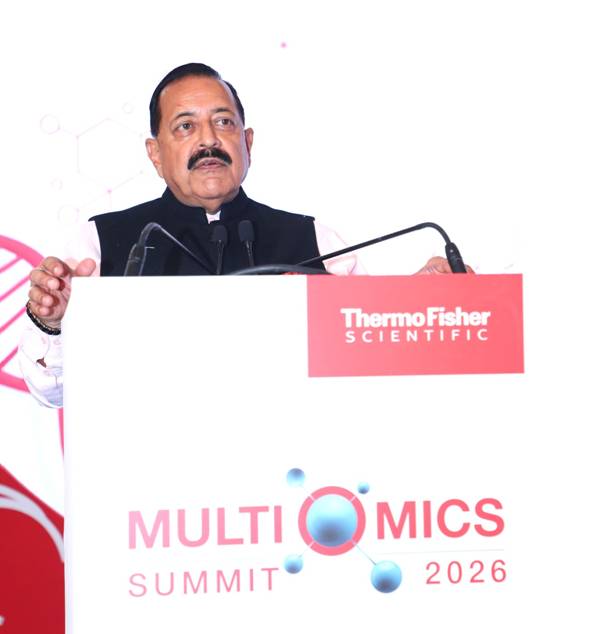
Delivering the inaugural address at the Multi-Omics Summit 2026, organised by the Proteomics Society, India (PSI) with advocacy partnership of the IHW Council, Dr. Jitendra Singh said India has moved from an era where advanced treatment required travelling abroad to a stage where the country is emerging as a global healthcare destination attracting medical tourism through quality and cost-effective care.
He said India’s healthcare ecosystem today integrates modern biotechnology, genomics, and AI-driven research with traditional knowledge systems such as Ayurveda, creating a unique model of integrated medicine. The creation of a dedicated Ministry of AYUSH and the expansion of biotechnology research platforms have enabled India to develop innovative healthcare solutions that combine tradition with advanced science.
Highlighting the growing importance of biotechnology in national development, Dr. Jitendra Singh said India is among the first countries to launch a comprehensive BioE3 policy, biotechnology for economy, environment and employment. The policy is designed to accelerate innovation, expand biomanufacturing capacity and generate new opportunities in the bio-economy.
The Minister said India’s biotechnology ecosystem has expanded dramatically in the last decade, with more than 11,000 biotech startups today compared to only a few dozen earlier. Government initiatives are strengthening biomanufacturing through dedicated funding, including the Biopharma Shakti scheme with an allocation of ₹10,000 crore, which will support biomanufacturing hubs, biofoundries and advanced research infrastructure.
Referring to India’s large and genetically diverse population, Dr. Jitendra Singh said the country has a unique advantage in genomic research. Through flagship initiatives such as the Genome India Project and the upcoming Phenome India initiative, India has already completed sequencing of around 10,000 genomes and aims to scale this effort significantly. Such large-scale genomic data will help researchers identify disease patterns, develop targeted therapies, and design early interventions even before clinical symptoms appear.
He said integrating genomics, transcriptomics, and proteomics through multi-omics platforms, supported by Artificial Intelligence and Machine Learning, will enable scientists to understand complex disease mechanisms and develop personalised treatments suited to diverse populations.
Dr. Jitendra Singh also highlighted several emerging breakthroughs in biomedical research, including advances in gene-based therapies and nuclear medicine. He cited recent progress in the treatment of diseases such as sickle cell disorder and hemophilia, as well as new therapeutic developments in nuclear medicine for acute lymphoblastic leukemia in children at the Tata Memorial Centre.
The Minister said India is increasingly becoming a hub for collaborative global research, particularly in areas such as multi-omics that require interdisciplinary partnerships across institutions, sectors, and countries. The government is encouraging such collaboration through policy reforms and expanded participation from academia, industry, and startups.
He said recent reforms have also opened the nuclear sector to private participation, enabling greater innovation in nuclear medicine research, which will play an important role in future healthcare technologies when integrated with genomics and precision medicine.
Dr. Jitendra Singh said India has also demonstrated global leadership in preventive healthcare through the development of the world’s first DNA-based vaccine, reflecting the country’s growing scientific capabilities and its commitment to affordable healthcare solutions.
Calling the present period one of the most exciting phases in the evolution of modern medicine, Dr. Jitendra Singh said the convergence of biotechnology, artificial intelligence, genomics, and digital platforms is creating unprecedented opportunities for healthcare innovation.
He expressed confidence that India’s scientific talent, research ecosystem and forward-looking policies will enable the country to not only collaborate globally but also lead future advances in biotechnology and precision medicine.
The summit brought together leading scientists, researchers, clinicians, biotechnology innovators, and industry experts to discuss the latest developments in multi-omics research and its potential to transform healthcare, diagnostics, and drug discovery.
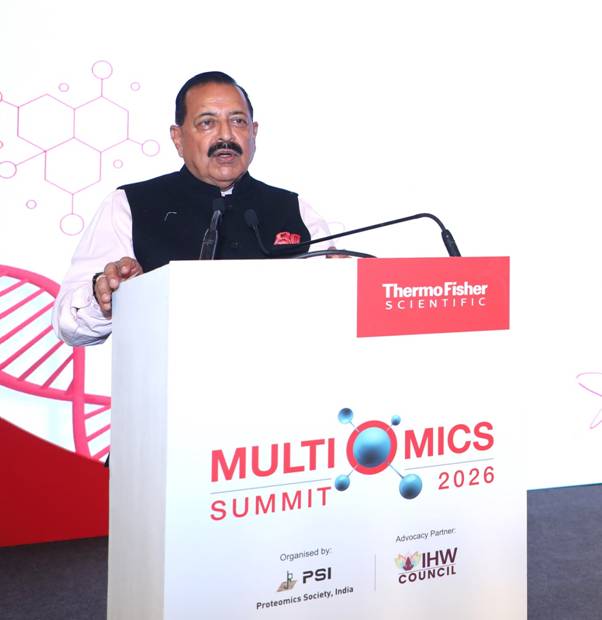
PHOTO: Union Minister Dr Jitendra Singh delivering keynote address at the “Multi Omics Summit 2026”, at New Delhi on Friday.