Inaugural Edition of Raisina Science Diplomacy Initiative (SDI) focuses on Strategic Autonomy and Disruptive Technologies
Inaugural Edition of Raisina Science Diplomacy Initiative (SDI) focuses on Strategic Autonomy and Disruptive Technologies
The inaugural edition of the Raisina Science Diplomacy Initiative (SDI) was held on 5 March 2026 at Bharat Mandapam, New Delhi. The initiative was jointly launched by the Office of the Principal Scientific Adviser to the Government of India and the Observer Research Foundation (ORF) as part of the Raisina Dialogue.
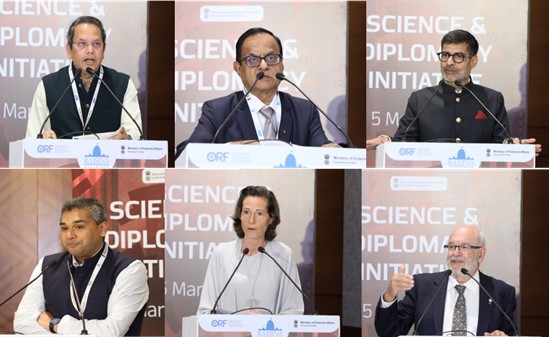
[from top left: Dr. Vijay Chauthaiwale, Prof. Ajay Sood, Dr. Samir Saran; Dr. Rudra Chaudhuri, Prof. Marilyne Andersen, Prof. Peter Gluckman]
The first edition of Raisina SDI convened global thought leaders, policymakers, and scholars to deliberate on the evolving role of science diplomacy in navigating the emerging imperatives of strategic autonomy and the governance challenges posed by disruptive technologies. The convening brought together about 80 scientists, innovators, diplomats, science diplomacy scholars and practitioners from across the world and from leading international organisations in a closed-door format designed to facilitate open exchange of ideas.
The initiative was chaired by the Principal Scientific Adviser to the Government of India, Prof. Ajay Kumar Sood, and co-chaired by Sir Peter Gluckman, President of the International Science Council; Prof. Marilyne Andersen, Director General of the Geneva Science and Diplomacy Anticipator (GESDA); and Dr. Vijay Chauthaiwale, In-charge of the Foreign Affairs Department of the Bharatiya Janata Party. The inaugural remarks underscored the increasingly central focus of science and technology to the imperatives of national development agendas of countries, economic competitiveness, national and global security priorities, and socio-economic progress. It was emphasised that in the evolving global landscape, science diplomacy is not static; it must continually adapt to new technological frontiers, shifting geopolitical realities, and emerging global challenges. President ORF Dr. Samir Saran remarked that the Raisina SDI is planned as a global platform for evolving contemporary framework for science diplomacy efforts from all perspectives.
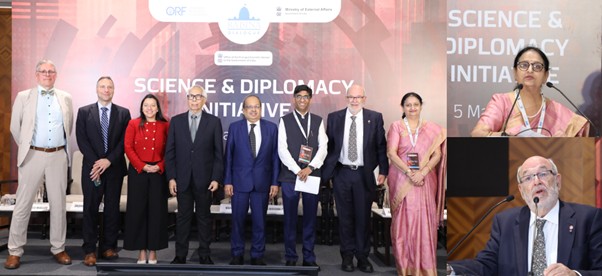
Roundtable on Science Diplomacy in the Era of Strategic Autonomy
The first roundtable, titled “Science Diplomacy in the Era of Strategic Autonomy,” was chaired by Dr. Parvinder Maini, Scientific Secretary, Office of the PSA, with scene-setting remarks by Prof. Peter Gluckman. Discussions underscored the need to balance national strategic priorities with the inherently collaborative nature of science. Discussants highlighted that scientific cooperation and trust in scientific systems remains a vital bridge even amid geopolitical shifts, and emphasized strengthening trusted networks, transparent research ecosystems, and resilient multilateral frameworks. The deliberation also emphasized the need to enhance risk-assessment mechanisms, strengthen science advice capacities and active engagement in a globally equitable manner for standard-setting processes.
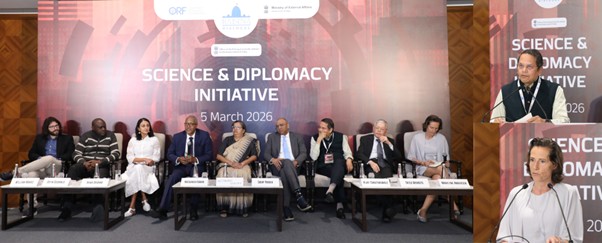
Roundtable on Science Diplomacy and Governance of Disruptive Technologies
The second roundtable, “Science Diplomacy and Governance of Disruptive Technologies,” was chaired by Prof. Marilyne Andersen, with scene-setting remarks by Dr. Vijay Chauthaiwale. The deliberations focused on emerging equitable and effective governance models for frontier technologies, including anticipatory policy process, inclusive norm-setting, and the importance of aligning technological innovation with contextual ethical and societal considerations. Participants stressed that proactive, globally coordinated approaches are essential to address risks while harnessing the transformative potential of disruptive technologies. The discussion also highlighted the importance of strengthening capacity for science diplomacy, leveraging scientific cooperation to reduce global inequalities, reinforcing multilateral engagement, promoting collaborations in pre-competitive research areas and addressing technology governance challenges through practical, use-cases driven approach.
As part of the initiative, Dr. Jahnavi Phalke, Director of Science Gallery Bengaluru delivered a talk on ‘historic evolution of science diplomacy’ highlighting how the landscape of science diplomacy has expanded beyond state actors to include a wider range of institutions; Dr. Steen Søndergaard, NATO Chief Scientist shared insights from NATO’s technology foresight efforts and its implications on global systems.
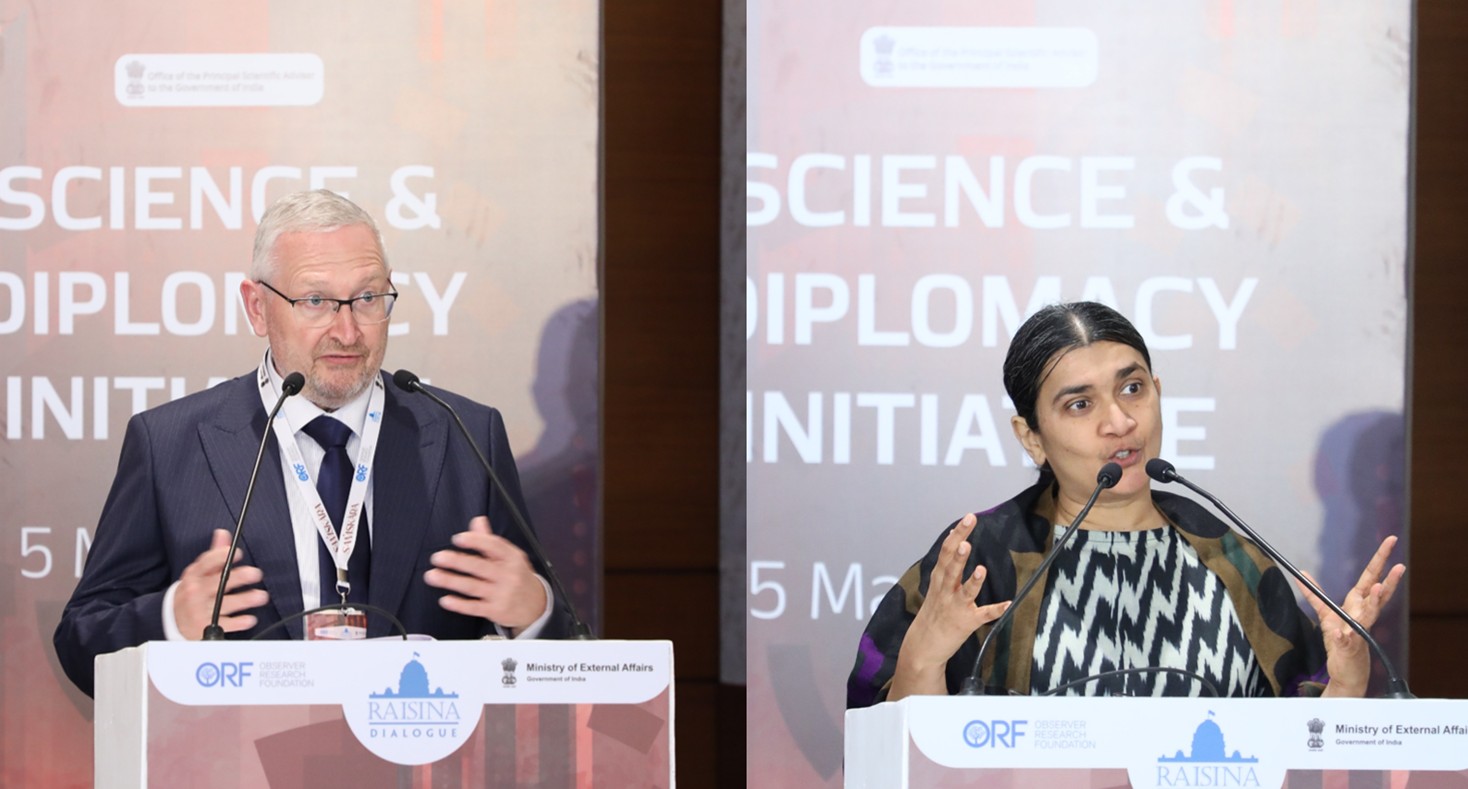
Dr. Steen Søndergaard and Dr. Jahnavi Phalke
The insights emerging from the Raisina Science Diplomacy Initiative will contribute to the evolving global discourse on science diplomacy. Envisioned as an annual platform, the initiative seeks to facilitate both contemporary and future-facing deliberations on the role of science and technology in shaping international policy, cooperation and governance. Looking ahead, Prof. Sood underscored the importance of further strengthening the initiative by reflecting on two key questions: the role that private sector actors can play in shaping frameworks for science diplomacy to better anticipate and govern disruptive technologies, and how they may be meaningfully integrated into future discussions; and the ways in which existing multilateral instruments can be leveraged and adapted to enable a more equitable diffusion of technological advancements across societies.