GPS transforming fishing community lives in Car Nicobar
GPS transforming fishing community lives in Car Nicobar
Global Positioning System (GPS) devices introduced to fishers in Car Nicobar, have enabled efficient and targeted fishing for steadier supply of fish for local people.
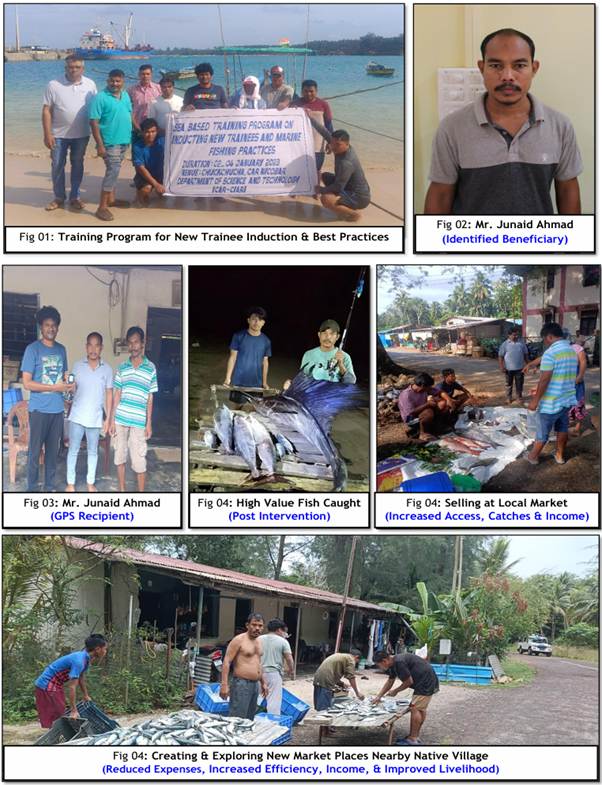
This has not only increased their consumption of fresh protein and vital nutrients, but some of them like Mr Junaid from Teetop village and Mr Abdul Sattar from Chuchucha village started selling their fish catches in markets thereby increasing their income.
The life and livelihood of Nicobarese communities are traditional fishing. Their fishing techniques are honed by experience but limited by the unpredictable nature of the sea and weather, as well as the lack of precise navigation tools. Often, boats get lost due to weather disturbances, resulting in loss of productivity and, at times, endangering lives.
In order to overcome this challenge, the Central Island Technological Research Institute has introduced GPS devices and adapted them for use in the local marine environment and fishing practices under the SEED Division programme of the Department of Science and Technology (DST).
Fishermen were trained on GPS navigation and modern fishing techniques to ensure that they could effectively use the GPS devices, surveys were conducted to assess fishermen’s needs and challenges and facilitate technology adoption and adoption of the technology was promoted through the Tribal Council.
The introduction of GPS technology has revolutionized the way fishermen locate fishing grounds, making it far easier and quicker for them to reach the best spots. With these devices in hand, their ability to catch fish has greatly improved, leading to fuller nets and more nutritious meals for their families and wider community.
A Coastal fisheries information hub has been established at Car Nicobar Island. A total 5 GPS devices were provided to the tribal fishermen of Car Nicobar and another 5 GPS kept for the common use of fishermen.
The efforts have led to a substantial increase in daily catch volume, with fishermen experiencing an average increase of approximately 168% even with less time now spent fishing due to precise navigation and marking of productive fishing grounds.
The increased fish availability has increased nutritional intake in families and the community. Higher income has provided better access to diverse food sources, contributing to improved health and nutrition.
For more details contact Dr. R Kiruba Shankar at rkirubasankar[at]gmail[dot]com.
****