German Delegation Visits NITI Aayog to Learn about Aspirational District and Aspirational Blocks Programmes
German Delegation Visits NITI Aayog to Learn about Aspirational District and Aspirational Blocks Programmes
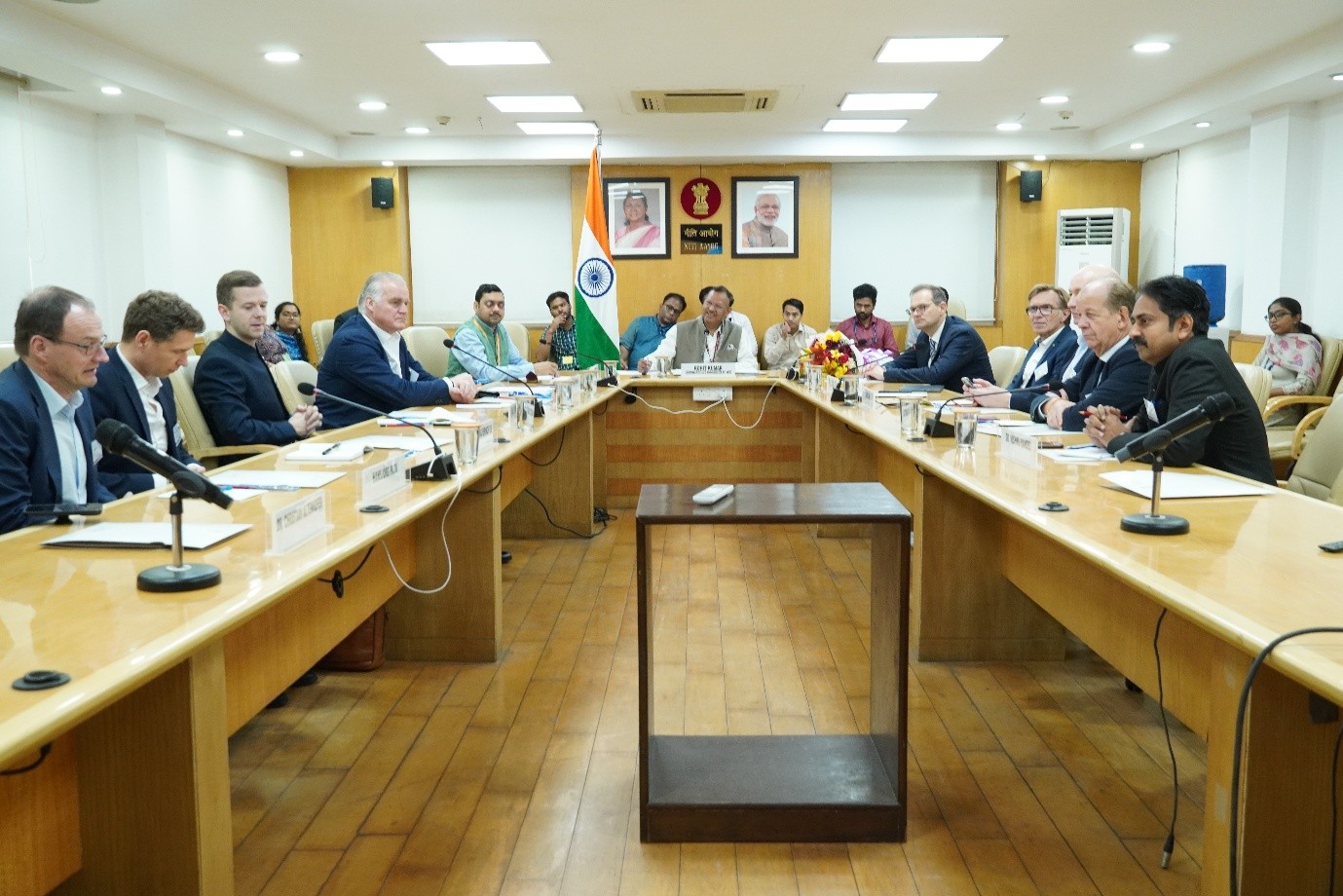
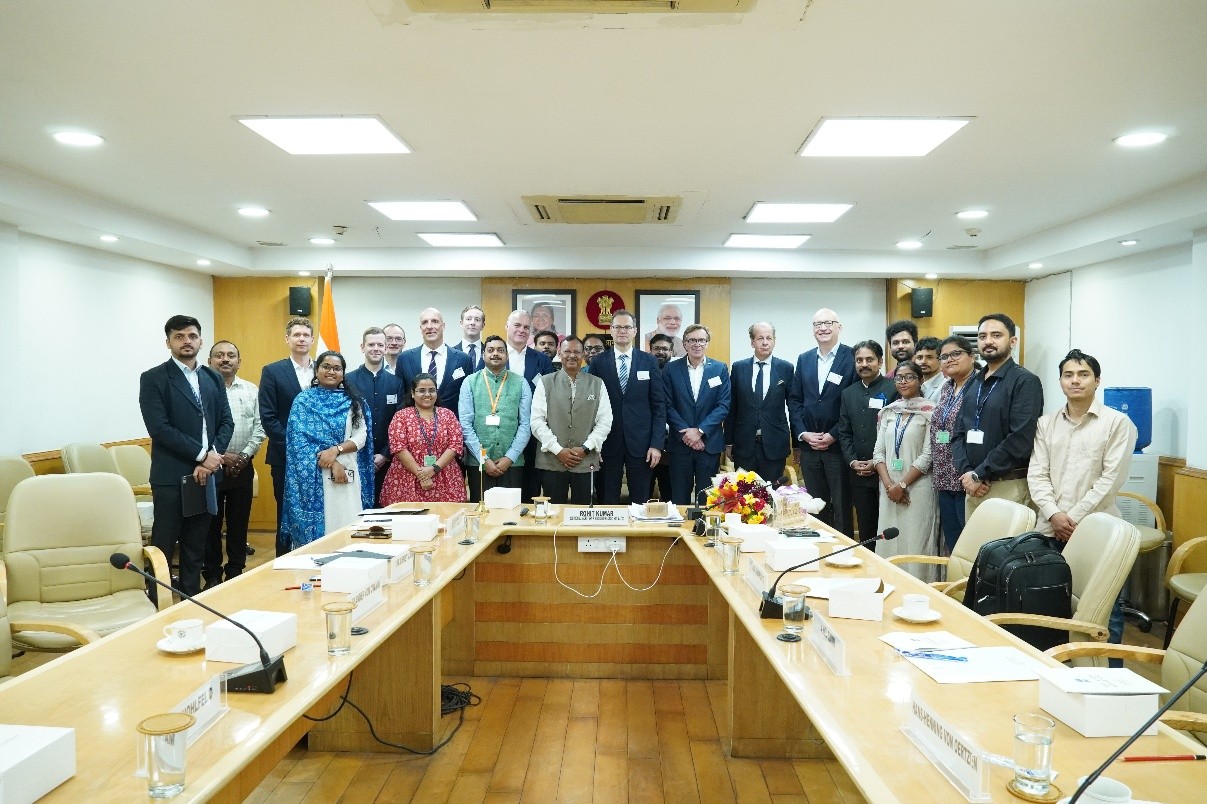
A delegation from Global Bridges, Germany, visited NITI Aayog to gain insights into the Government of India’s flagship initiatives — the Aspirational District Programme (ADP) and Aspirational Blocks Programme (ABP) — aimed at accelerating development outcomes and strengthening service delivery at the district and block levels.
The interaction was chaired by Shri Rohit Kumar, Additional Secretary and Mission Director, ADP/ABP, NITI Aayog, who provided an overview of the design, implementation framework and impact of the Aspirational District and Aspirational Blocks Programmes.
During the interaction, Shri Rohit Kumar highlighted that the programmes are anchored on the principles of 3C — Convergence, Collaboration and Competition, along with 3F — Funds, Functions and Functionaries, which facilitate coordinated action among Central Ministries, State Governments and district and block administrations. He emphasised that the initiatives focus on improving key development indicators across sectors such as health, education, agriculture, financial inclusion and basic infrastructure through targeted interventions and close monitoring.
Shri Rohit Kumar also explained that the programmes leverage data-driven monitoring systems, real-time dashboards and regular field-level engagement to track progress, identify development gaps and enable evidence-based decision-making at the district and block levels.
The delegation, headed by Dr. Stefan Traeger, appreciated the progress achieved under the Aspirational District and Aspirational Blocks Programmes and acknowledged the robust monitoring framework and data-driven governance model adopted under ADP/ABP.
The delegation further visited the Viksit Bharat Strategy Room, where the NITI Aayog team demonstrated how data analytics and visualisation tools are being used to generate insights, identify development gaps and support evidence-based policymaking across the Centre, States and districts.