Denial of speculations on India-US Trade Agreement, farmers’ interests paramount: Union Agriculture Minister Shri Shivraj Singh Chouhan
Denial of speculations on India-US Trade Agreement, farmers’ interests paramount: Union Agriculture Minister Shri Shivraj Singh Chouhan
Union Minister for Agriculture and Farmers’ Welfare, and Rural Development, Shri Shivraj Singh Chouhan today categorically dismissed various speculations surrounding the India-US Trade Agreement from Jaipur, Rajasthan, stating in clear terms that under the leadership of Prime Minister Shri Narendra Modi, there will never be any compromise on farmers’ interests.
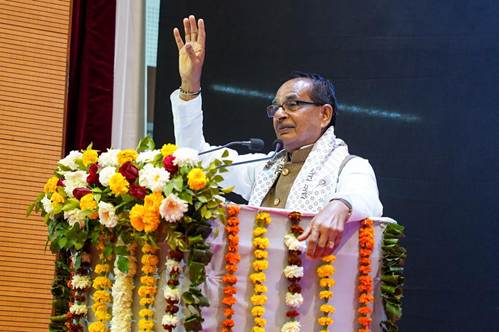
Shri Shivraj Singh Chouhan emphasised that as India’s Agriculture Minister, he is stating with full responsibility to the farmers that no compromise has been made on Indian farmers’ interests in any agreement. He made it abundantly clear that the door is firmly closed on sensitive crops like wheat, rice, and maize. India is now number one in the world in rice production, having surpassed China. In such a scenario, no imports that could harm farmers have been accepted.
Indian farmers’ interests fully protected
Addressing questions raised on the apple issue, Union Agriculture Minister Shri Shivraj Singh Chouhan explained that India requires approximately 5.5 lakh metric tons of apples every year, which currently come from countries like Turkey and Iran as well. He stated that if only 1 lakh metric tons of apples are sourced from the US out of this quantity, with a quota determined by adding a duty of ₹25 over the import value of ₹80 per kg, it will not cause any harm to India’s apple producers. Rather, it is merely a minor shift from sourcing from Turkey to another place.
On soybeans and maize, he clarified unequivocally that no concessions have been granted on these. He also reminded that during the Congress regime, agricultural imports worth $20 billion took place, which included dairy products as well.
Shri Shivraj Singh Chouhan stressed that Prime Minister Shri Narendra Modi has given clear instructions that no dairy products — milk, ghee, curd, paneer, or any others — will be allowed to be imported onto Indian soil at any cost, ensuring no harm comes to the country’s milk-producing farmers.
In the case of cotton, Union Minister Shri Shivraj Singh Chouhan stated that domestic production falls short of the needs of industries, which necessitates some cotton imports to keep the textile industry running, boost employment, and increase exports. He informed that India’s textile exports, combining various products, currently stand at about 4 lakh crore rupees, with the potential to reach ₹45 lakh crore. Ultimately, the benefits will accrue to farmers and the rural economy.
He announced emphatically that no room has been left for imports of spice crops like cumin, fenugreek, and psyllium produced in Rajasthan, along with other Indian spices. Instead, arrangements have been made to increase exports of these spices to markets like the United States with zero duty, directly benefiting Indian farmers.
The Union Agriculture Minister stated in unequivocal terms that Prime Minister Shri Narendra Modi had made two promises to the nation — “I will never let India bow down” and “I will keep farmers’ interests paramount and not allow any harm to come to them” — and the government stands firmly on both. Citing Operation Sindoor, airstrikes, and surgical strikes, he remarked that just as no compromise was made on national security, similarly, there will be no compromise on agriculture and farmers’ interests. Every global agreement will be viewed through a “farmer-first approach.”
This detailed clarification from Shri Shivraj Singh Chouhan comes amid ongoing discussions and concerns about the India-US trade agreement, particularly regarding its potential impact on India’s agricultural sector. The minister’s statements aim to reassure farmers and stakeholders that the government’s negotiations have prioritized protecting domestic producers from any adverse effects of increased foreign competition. By specifying quotas, duties, and outright bans on sensitive items, the agreement ensures that India’s self-sufficiency in key food grains and dairy remains intact.
For instance, wheat, rice, and maize — staples that form the backbone of India’s food security — are completely shielded from US imports. This is crucial given India’s position as a global leader in rice production, a status achieved through years of focused agricultural policies and farmer support programs. Similarly, the dairy sector, which supports millions of small-scale producers across rural India, has been ring-fenced with absolute prohibitions, reflecting the cultural and economic significance of products like milk and paneer in daily life.
The apple import allowance, limited to a modest quota with protective duties, exemplifies a balanced approach. India’s annual apple demand is met largely through imports due to limited domestic temperate horticulture suitable for this crop. Redirecting a fraction from traditional suppliers like Turkey to the United States does not threaten local growers in regions like Himachal Pradesh and Jammu and Kashmir, who focus on premium varieties. This move could even stabilise prices by diversifying sources, preventing over-reliance on geopolitically volatile suppliers.
Soybeans and maize, vital for oilseed and feed industries, remain untouched by concessions, countering narratives of vulnerability. The minister’s reference to past regimes underscores a comparative perspective: under previous governments, higher import volumes allegedly undermined local production, whereas the current framework emphasises safeguards. Cotton’s treatment highlights industrial pragmatism.
India’s textile sector is a major forex earner and job creator, employing over 45 million people, predominantly in rural areas. Supplementary imports ensure mills operate at capacity, sustaining demand for home-grown cotton and enabling ambitious export targets. This symbiotic linkage benefits farmers through higher procurement prices and expanded markets.
Spice exports stand to gain significantly. Rajasthan’s arid specialties like cumin, fenugreek, and psyllium command premium prices globally. Zero-duty access to the United States market will enhance farmer incomes directly, without reciprocal import risks. India’s spice sector already exports over ₹1.5 lakh crore annually, and such deals amplify this strength.
Prime Minister Modi’s directives frame the entire policy: national sovereignty and farmer welfare are non-negotiable. Analogies to military operations reinforce this resolve, positioning trade as an extension of strategic autonomy. The “farmer-first” lens ensures all pacts undergo rigorous scrutiny for domestic impacts.