CSIR-NIScPR organised the National Capacity Building Workshop on “Traditional medicine: Documentation, validation and Communication”
CSIR-NIScPR organised the National Capacity Building Workshop on “Traditional medicine: Documentation, validation and Communication”
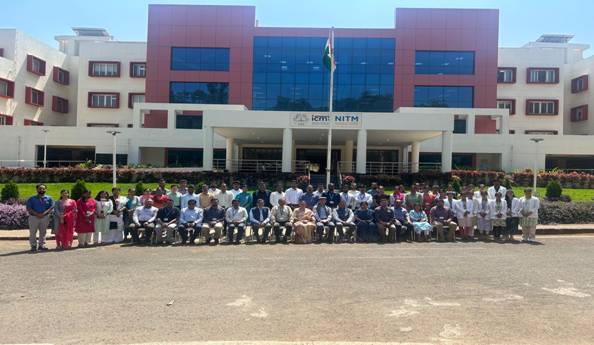
CSIR-National Institute of Science Communication and Policy Research (NIScPR) in association with the ICMR-National Institute of Traditional Medicine (NITM) organised a National Capacity Building Workshop on “Traditional medicine: Documentation, validation and Communication” under the national initiative SVASTIK (Scientifically Validated Societal Traditional Knowledge) on 06th March 2026 at NITM, Belagavi. More than 60 participants from 10 different institutions in and around Belagavi registered and actively participated in the workshop.
The Inaugural function was graced by Dr Padma Gurmet, Padma Shri and Director, National Institute of Sowa Rigpa (NISR); Prof Ranjana Aggarwal, Outstanding Scientist, CSIR and Former Director, CSIR-NIScPR; Dr Subarna Roy, Director, ICMR-National Institute on Traditional Medicine (NITM), and Dr Geetha Vani Rayasam, Director, CSIR-NIScPR who joined online.
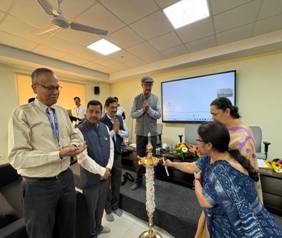
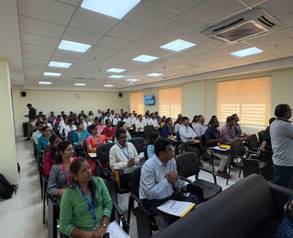
The programme started with the welcome address by Dr Harsha Hegde, Scientist F, ICMR-NITM. It was followed by the introductory remarks by Dr Subarna Roy. He emphasised on the importance of communicating research happening in traditional medicine to society at various platforms, and urged that researchers at any stage of their career must be equipped with the nuances of science communication.
Dr Padma Gurmet, the Chief Guest of the programme delivered an insightful talk on Sowa Rigpa and discussed in detail the inception journey of NISR. In his discussion, he emphasised on the importance of traditional systems of medicine especially Sowa-Rigpa, its interconnectedness with Ayurveda, and the need for documentation, validation and communication of traditional medicines for better visibility and integration in contemporary medical system.
Prof Ranjana Aggarwal delivered an engaging keynote talk where she provided an overview of Indian traditional knowledge system. Dwelling on the concept of Vedas and Panchkosha, and citing many examples from different traditional knowledge/practices of India, she emphasised on the importance of validating such knowledge, its convergence with modern science, and effectively communicating them to society. The inaugural session came to an end with the vote of thanks proposed by Dr Charu Lata, Principal Scientist and Coordinator, SVASTIK, CSIR-NIScPR.
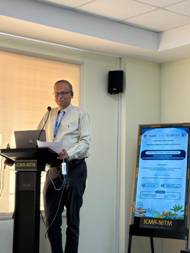
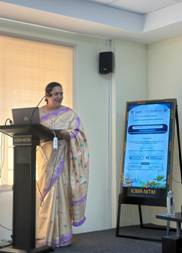
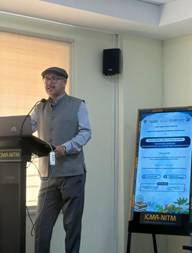
The first technical session of the workshop on “India’s traditional medicine heritage: From protection to perpetuation” focused on India’s rich and diverse traditional medicine heritage and its continuity in the present era. It started with the plenary lecture by Prof Pulok Mukherjee. He spoke on Translation of traditional medicine, systems ethnopharmacology and sustainable bioresources. He urged to value local health traditions, development of ethnopharmacology driven products keeping in mind regulatory guidelines and ethical considerations, and utilization of sustainable bioresources.
Vaidya Pawankumar Ramesh Godatwar, World Health Organization Centre, New Delhi delivered a very insightful plenary talk on the WHO perspectives on holistic health world-wide. He spoke about the research priority settings in traditional medicine initiated by WHO for affordable and sustainable health for majority population globally.
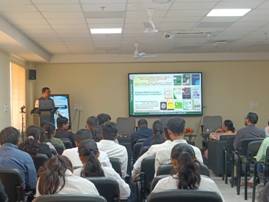
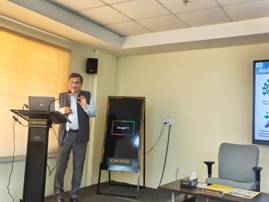
In the second technical session, Dr Charu Lata delivered an insightful talk on India’s traditional systems of medicine. She also outlined the systematic process followed under the national initiative SVASTIK from identifying and validating traditional practices to documenting and communicating them to the public through social media platforms. She added that educators and researchers who can link conventional knowledge with verified scientific data can effectively communicate science.
It was followed by an interactive hands-on training on traditional knowledge communication by Dr Paramananda Barman, Senior Scientist, CSIR-NIScPR. He explained the fundamentals of science communication and discussed its various forms that help translate scientific concepts for wider audiences. During the session, participants received hands-on training in writing popular article, designing communication materials, and creating visually appealing infographics, and short videos. During the workshop, SVASTIK was also showcased through a vibrant exhibition displayed by the CSIR-NIScPR team. The workshop concluded with interactive feedback from the participants.