India-EU Trade and Technology Council 2nd Workshop on EV Charging Technologies: Advanced Cooperation on Standardisation, Smart and Bidirectional Charging, Megawatt Charging Systems, and Wireless Charging
India-EU Trade and Technology Council 2nd Workshop on EV Charging Technologies: Advanced Cooperation on Standardisation, Smart and Bidirectional Charging, Megawatt Charging Systems, and Wireless Charging
The 2nd India-EU Workshop on Electric Vehicle (EV) Charging Technologies was held at the Joint Research Centre (JRC), Ispra, Italy, from 15 to 17 March 2026 under the auspices of the India-EU Trade and Technology Council (TTC) Working Group 2 on Green and Clean Energy Technologies. The workshop was jointly organised by the Office of the Principal Scientific Adviser (OPSA) to the Government of India, and the Directorate-General for Research and Innovation (DG RTD) of the European Commission in partnership with Joint Research Centre (JRC) of the European Commission, the Automotive Research Association of India (ARAI), and EU Delegation to India.
The India and the European Union continue to deepen their strategic partnership under the India-EU TTC, with growing cooperation in green and clean energy technologies contributing meaningfully to sustainable mobility, resilient innovation ecosystems, and future-ready industrial partnerships.
The workshop brought together policymakers, technical experts, standards bodies, testing and research institutions, and industry representatives from India and the European Union to deliberate on pathways for developing harmonised, interoperable, and future-ready EV charging ecosystems. The programme included updates on policy and standards, strategic industry perspectives, technical sessions on megawatt charging systems, vehicle-to-grid integration and bidirectional charging, and wireless power transfer, along with laboratory visits to JRC’s EV and smart grid testing facilities.
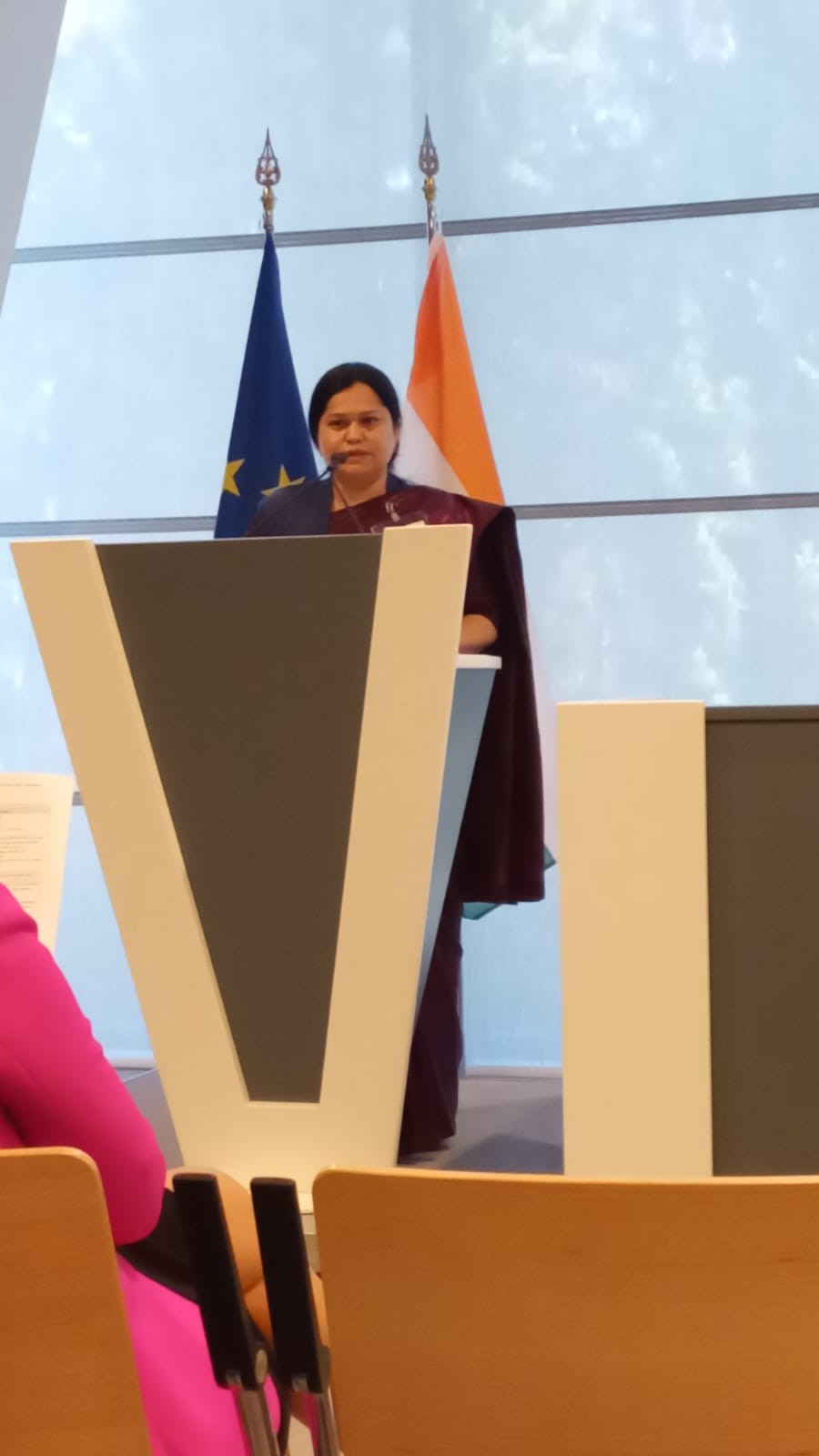
In her opening remarks, Dr Rakesh Kaur, Adviser/Scientist-‘G’, OPSA, underlined the importance of India-EU cooperation in creating trusted, interoperable, and future-ready charging ecosystems for clean mobility transition. Ms. Nienke Buisman, Head of Unit International Cooperation, DG RTD EC and Dr Christian Thiel, Head of Unit (Sen.), JRC also highlighted the importance of deeper India-EU collaboration in research, innovation, standards, and testing to support the transition towards sustainable and connected mobility systems.
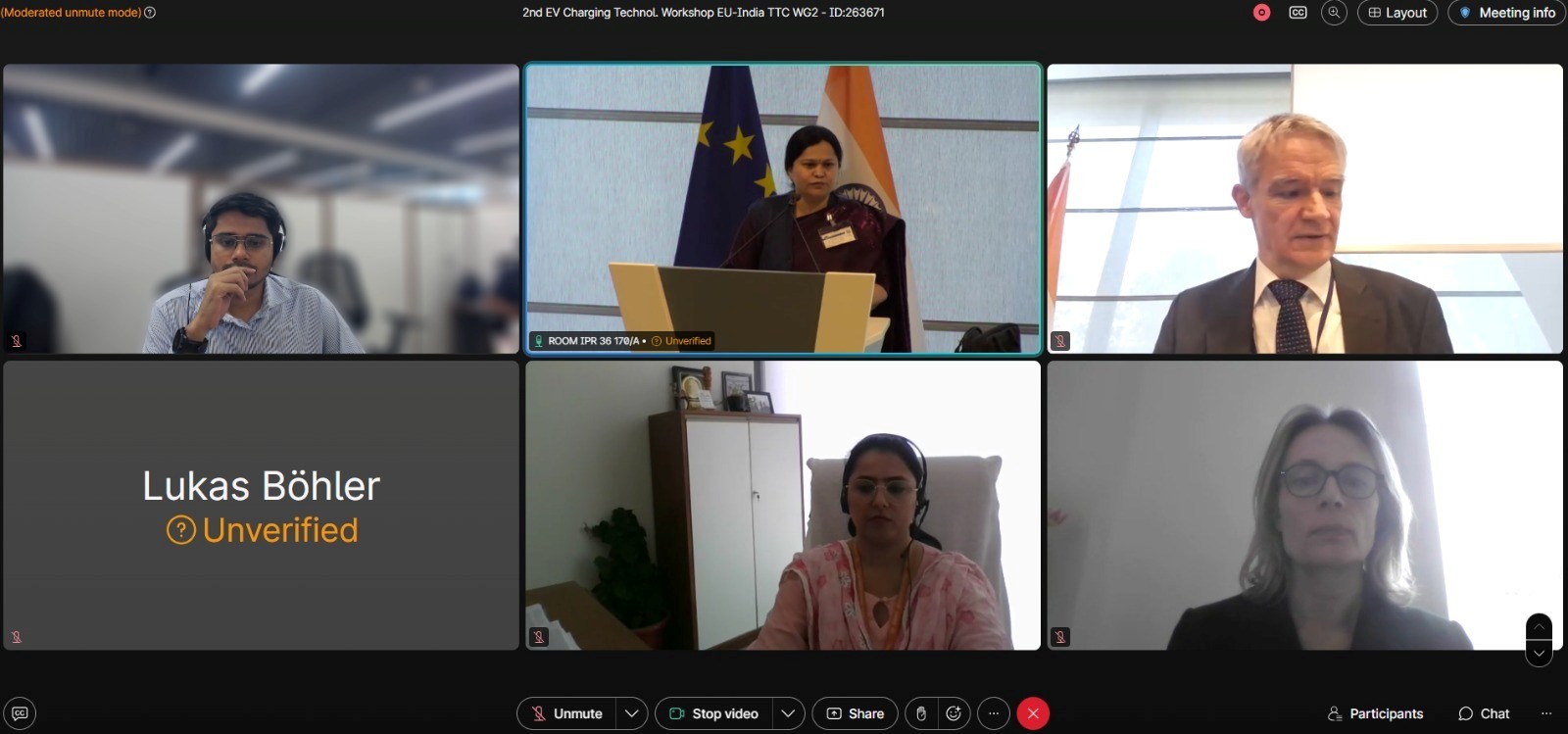
The workshop addressed a wide range of strategic and technical themes. These included developments in research, standards and legislative frameworks in India and Europe; evolving charging infrastructure requirements; communication and interoperability protocols including the Open Charge Point Protocol (OCPP); industry perspectives on harmonised charging solutions; the status of international standards and implementation pathways for Megawatt Charging Systems (MCS) for heavy-duty vehicles; Vehicle-to-Grid (V2G) integration and multi-brand interoperability; the recently published ISO 15118-21 conformance test plan for vehicle-to-grid communication; and ongoing pre-normative research on Wireless Power Transfer (WPT) charging systems.
Participants also visited the European Interoperability Centre for EVs and Smart Grids at JRC Ispra, including the Interoperability Testing Lab, EMC Testing Lab VeLA9, Cold/Warm E-mobility Testing Lab VeLA8, Smart Grid Testing Lab, and the JRC’s semi-public charging field. The visit offered first-hand exposure to advanced facilities supporting data-driven, pre-normative research and trusted testing for EV charging and smart grid integration.
The workshop concluded with a wrap-up session led by Dr Kaur and Ms. Buisman; Dr Reji Mathai, Director, ARAI; Dr Liliana Pasecinic, Deputy Head and Dr Harald Scholz, Project Leader from JRC, reaffirming the shared intent of India and the European Union to deepen technical cooperation, knowledge exchange, and stakeholder engagement in support of harmonised EV charging standards and sustainable mobility solutions. The workshop reflected the commitment to enable a globally interoperable, secure, and resilient clean mobility ecosystem.
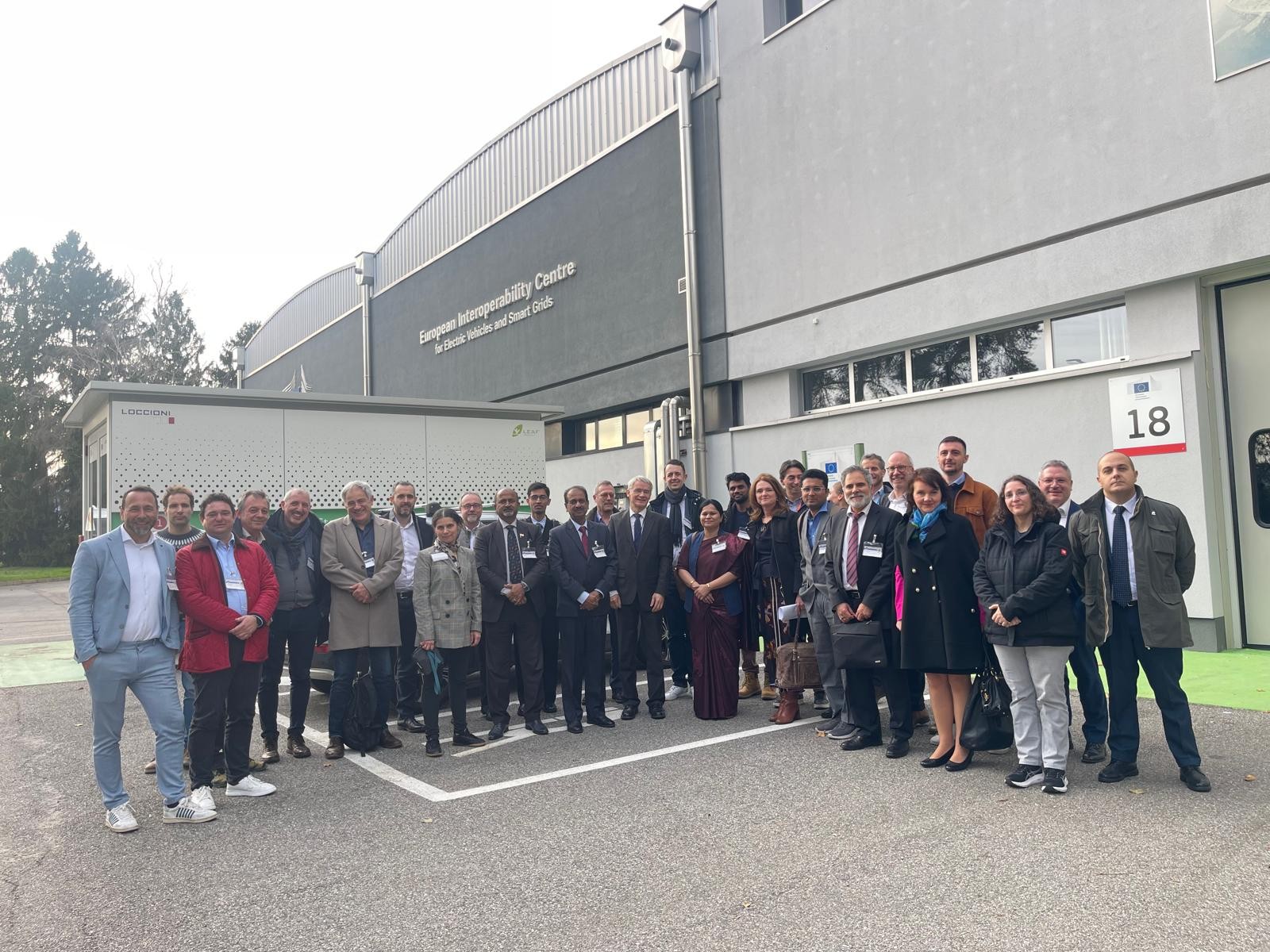
Other officials and experts contributing across the workshop included Dr Hafsa Ahmad, Scientist-‘D’, OPSA; Mr. Abhijit Mulay, Deputy Director, ARAI Mr. Nitish Kumar Jain, Bureau of Indian Standards; Ms. Aleksandra Klenke and Ms. Marina Kousoulidou from DG MOVE; and Mr. Antonio Marquez Camacho, DG RTD. The workshop also saw participation from representatives of industry and research institutions including Tata Motors, Fraunhofer Society, Open Charge Alliance, Society of Indian Automobile Manufacturers, SCANIA/TRATON, Industrial Vehicles Corporation (IVECO)/TATA, Asea Brown Boveri (ABB), Alpitronic, Argonne National Laboratories, University of Mumbai, ENEDIS, ENEL X, ELLI, CharIN, IIT Madras, DELTA, and BRUSA.