CBC organises “Bharat CPSEs’ Capacity Building Workshop on CSR Governance”
CBC organises “Bharat CPSEs’ Capacity Building Workshop on CSR Governance”
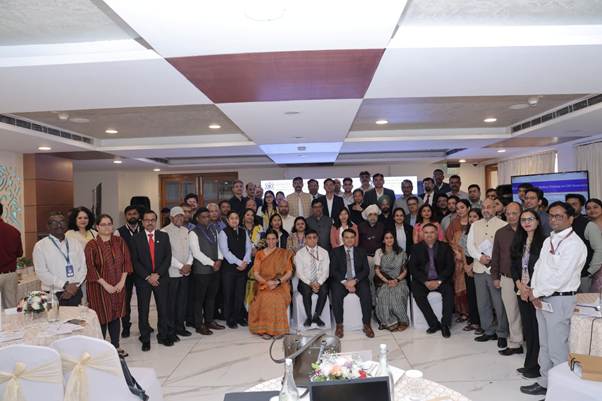
The Capacity Building Commission (CBC), in collaboration with the Department of Public Enterprises (DPE) and in partnership with the Indian Institute of Corporate Affairs (IICA), organised the “Bharat CPSEs’ Capacity Building Workshop on CSR Governance” on 12th March, 2026 at New Delhi. The workshop brought together senior leadership from Central Public Sector Enterprises (CPSEs), officials from Central Ministries, regulators, industry representatives and academic experts to deliberate on strengthening Corporate Social Responsibility (CSR) governance and aligning sustainability initiatives with national development priorities.
The workshop served as a strategic platform to facilitate dialogue on the evolving landscape of CSR governance and its integration with Environmental, Social and Governance (ESG) frameworks. The discussions focused on enabling CPSEs to move from compliance-driven CSR practices to strategic and outcome-oriented initiatives that generate measurable social impact and support India’s Sustainable Development Goals (SDGs) and national development missions.
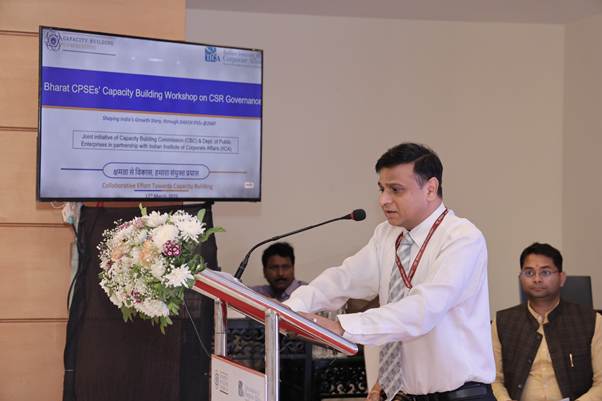
Delivering the inaugural address, Shri Gyaneshwar Kumar Singh, Director General and Chief Executive Officer, Indian Institute of Corporate Affairs (IICA), highlighted the evolving role of Corporate Social Responsibility in India’s development framework. He noted that with policy reforms, CSR has increasingly moved from compliance towards creating measurable social impact. Emphasising strategic planning and innovation in CSR initiatives, he stressed the importance of aligning CSR with ESG principles and the Sustainable Development Goals. He further underscored that greater convergence among CPSEs and emphasised that the stakeholders can help pool resources and expertise to generate larger and more sustainable developmental outcomes.
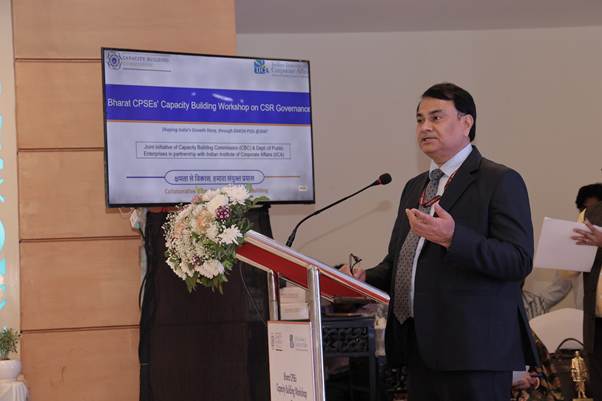
While setting the context, Dr. Alka Mittal, Member, Capacity Building Commission, highlighted that the workshop provides an important platform for dialogue among policymakers, practitioners and implementing institutions to strengthen CSR governance across CPSEs. She noted that Public Sector Enterprises have historically played a vital role as nation builders, contributing not only to economic growth, but also to socio-economic development in communities where they operate. Referring to the evolution of CSR since the introduction of the Companies Act provisions, she emphasised the need to strengthen institutional capacity and develop competency-driven capabilities among officials involved in CSR implementation. Dr. Mittal added that the Capacity Building Commission seeks to facilitate cross-sectoral learning and knowledge sharing to strengthen governance frameworks and enhance the impact of CSR initiatives.
Shri Jagdeep Gupta, Secretary, Capacity Building Commission, earlier in his opening remarks underscored the strategic role of CPSEs in advancing national development priorities through impactful CSR interventions. He highlighted that aligning CSR programmes with sustainability frameworks, national missions and governance standards would enable CPSEs to generate long-term public value and strengthen institutional accountability.
The workshop witnessed participation from representatives of several Maharatna, Navratna and other CPSEs, officials from ministries and government institutions, CSR leaders from industry bodies, and experts from academia and policy institutions.
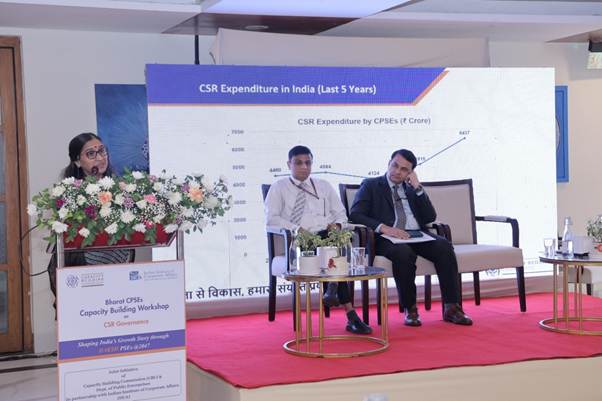
The first technical session on “Strategic CSR Project Identification and Planning for National Convergence” explored governance frameworks for CSR planning and alignment with national priorities. The session featured insights from Dr. Garima Dadhich, Associate Professor and Head, School of Business Environment, IICA; Shri Biren Desai and Shri Shakti Kumar from Tata Consulting Engineers; Shri Parveen Tyagi, Joint Director, Ministry of Skill Development and Entrepreneurship; and Ms. Uma S. Seth, Assistant Secretary General (CSR, Diversity, Equity and Inclusion), FICCI, who discussed strategic planning, board-level oversight and convergence of CSR initiatives with national missions.
The second session on “Aligning CSR with Sustainable Development Goals (SDGs) – Measuring Development Impact” focused on strengthening impact measurement frameworks and reporting systems for CSR programmes. The session opened with an address by Shri Subhash Chandra Malik, Additional Director General, Social Statistics Division, Ministry of Statistics and Programme Implementation, followed by case presentations by Dr. Debasish Mukherjee, Executive Director (HR), ONGC; Shri V. Jayanarayanan, Chief General Manager (CSR), NTPC; and Mr. Bibhuti Ranjan Pradhan, Executive Director (CSR), Indian Oil Corporation Limited, who shared experiences on implementing high-impact CSR initiatives.
An expert talk on “Net Zero Emission Pathways for India” was delivered by Mr. Gautam Sen, Former Executive Director and Geoscientist, ONGC, who highlighted the role of CPSEs in advancing sustainability transitions and contributing to India’s climate commitments.
The afternoon session on “Mainstreaming ESG into Corporate Strategy” examined the integration of ESG frameworks within CPSE governance systems. The session opened with remarks by Mr. Amit Anand, Deputy Inspector General, Forest and Wildlife, Ministry of Environment, Forest and Climate Change.
The workshop also included an interactive roundtable session with participation from more than forty CPSEs. Participants deliberated on operational challenges in CSR implementation, regulatory constraints, coordination with local administrations and opportunities for policy reforms to strengthen CSR governance. The discussions focused on identifying scalable implementation models, improving inter-institutional coordination and strengthening capacity building mechanisms.
The deliberations emphasised the need to align CSR initiatives with national development priorities, enhance collaboration between CPSEs and government institutions, and strengthen monitoring and evaluation frameworks to ensure measurable and outcome-driven social impact.
The workshop concluded with a valedictory session summarising the key insights emerging from the deliberations. This was followed by the address by Shri Lucas L. Kamsuan, Joint Secretary, Department of Public Enterprises, who emphasised that CSR should be viewed not merely in terms of corporate contribution but by the impact it creates on society. He urged participants to take forward the discussions through concrete action, including integrating ESG considerations into board-level deliberations. The programme concluded with a vote of thanks delivered by Ms. Navneet Kaur, Director, Capacity Building Commission.
The Bharat CPSEs’ Capacity Building Workshop on CSR Governance marks an important step towards strengthening sustainability-led governance across CPSEs and enhancing their contribution to India’s broader development and sustainability goals.