SWAMIH: A Policy Lifeline for India’s Housing Sector
SWAMIH: A Policy Lifeline for India’s Housing Sector
Key Takeaways
Housing at the Centre of India’s Transformation
For millions of Indian families, owning a home represents stability, security, and a lifetime investment. As India’s cities grow and urban aspirations expand, housing has become central to social wellbeing and economic progress, supporting employment and activity across construction, infrastructure, and allied sectors.
Home ownership is seen both as a personal milestone and a foundation for inclusive infrastructure development. Over the years, steady policy attention has strengthened housing supply in the affordable and mid-income segments, with a large number of projects coming up in towns and cities across the country. Many of these projects get stalled due to financial and other constraints.
An Expert Committee on the Rehabilitation of Legacy Stalled Real Estate Projects (MoHUA, 2023) observed that stress in real estate projects largely stems from gaps in financial viability, often resulting in cost overruns and delays. The Committee emphasised the importance of priority financing and recommended a proactive role for the SWAMIH Fund in enabling project completion. The underlying premise was clear: unless stalled developments are carried through to completion, the intended expansion in housing supply cannot be fully realised.
A targeted intervention in the form of SWAMIH was introduced by the Government of India. Launched in 2019, the Special Window for Affordable and Mid-Income Housing Investment Fund provides last-mile financing to housing projects affected by financial constraints. By focusing on completion rather than initiation, SWAMIH seeks to translate partially built structures into delivered homes, safeguard the interests of existing homebuyers, and reinforce confidence in the housing sector. The initiative reflects a broader shift towards outcome-based infrastructure support, where success is measured not only by investment deployed, but by timely delivery and tangible impact on people’s lives.
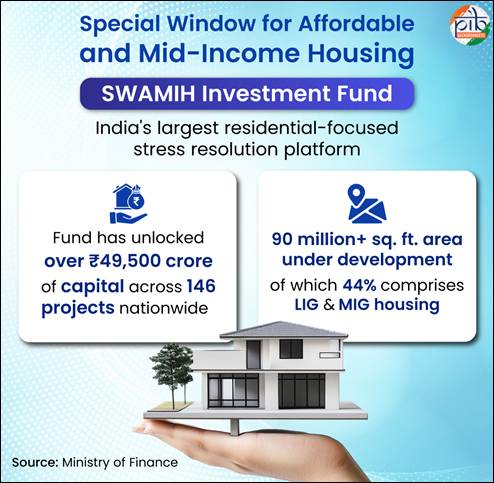
SWAMIH’s portfolio spans over 146 residential projects across 20 cities and 12 States, positioning SWAMIH as the largest residential-focused stress resolution platform in the country. Through these interventions, the Fund is expected to facilitate the delivery of more than 1 lakh homes, providing relief to over 2.38 lakh people. Building on the success of the original SWAMIH Fund, the government announced in Budget 2025-26 that SWAMIH Fund-2 will be established to further accelerate the completion of stalled housing projects across the country.
India’s Housing Policy Ecosystem
India’s housing strategy has evolved as a cohesive policy ecosystem, addressing housing needs across income segments, geographies, and stages of development. The approach combines housing creation, affordability support, rental solutions, and project completion mechanisms. Together, these policies reinforce stability, confidence, and continuity in the housing sector.
PMAY-U was launched in 2015 to enable access to pucca housing for eligible households, particularly within Economically Weaker Sections (EWS), Low Income Groups (LIG), and Middle Income Groups (MIG).
PMAY-U 2.0 builds upon earlier learnings to extend housing support to an additional one crore families over the next phase. The scheme involves an investment of ₹10 lakh crore and will be implemented over a five-year period starting from 1 September 2024. The scheme expands eligibility and incorporates a wider set of beneficiary categories, including vulnerable and special groups.
Recognising the need for flexible housing options, ARHCs were introduced to provide dignified rental accommodation for migrants and urban workers. The initiative leverages both existing government housing stock and new developments through partnerships.
While flagship missions focus on creation and access, SWAMIH plays a distinct role by addressing the final stage of the housing lifecycle — ensuring that homes under development are completed and handed over to home buyers. Backed by an aggregate corpus of ₹15,531 crore from the Government of India, Public Sector Undertaking banks, and LIC, the fund provides financing to facilitate completion of stalled and stressed residential developments nationwide.
From Stalled Projects to Delivered Homes: The Need for SWAMIH
Before the launch of SWAMIH, nearly 90% of stalled housing projects — around 1,509 projects involving approximately 4.58 lakh housing units were concentrated in the affordable and mid-income segments, requiring ~₹55,000 crore of funding to complete them according to a study commissioned by SBI Ventures. Recognising the scale of this challenge, the SWAMIH Investment Fund was established to unlock liquidity in stressed housing projects and reduce financial pressure. The initiative supports the residential real estate ecosystem and its allied sectors such as construction, building materials, and financial services.
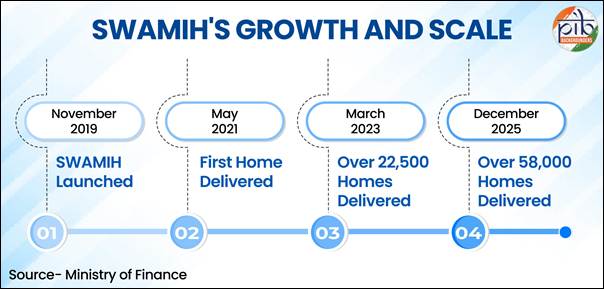
The effectiveness of this approach became visible in 2021, when possession was handed over to homebuyers at Rivali Park, in suburban Mumbai. Rivali Park became the first housing project in the country to be completed with SWAMIH funding. This marked a turning point, demonstrating how SWAMIH’s support could convert unfinished sites into livable homes. By March 2023, SWAMIH had delivered over 22,500 homes, marking an early milestone in the Fund’s implementation. This progress continued to scale, with over 58,000 homes delivered by December 2025, underscoring the growing scale of the Fund’s on-ground impact.
Understanding the Structure of SWAMIH
SWAMIH operates as a government-backed investment fund created specifically to support stalled housing projects. It pools capital from multiple investors and deploys it as priority debt to projects that are viable but delayed due to lack of funds. The Government of India acts as the Sponsor of the Fund with the Department of Economic Affairs, Ministry of Finance, responsible for oversight and strategic direction. Professional fund management is handled by SBICAP Ventures Ltd., a wholly-owned subsidiary of the State Bank of India, ensuring institutional rigor and financial discipline in the deployment and monitoring of funds.
SWAMIH is a Category-II Alternate Investment Fund. An Alternative Investment Fund (AIF) refers to any fund established or incorporated in India that functions as a privately pooled investment vehicle. It raises capital from sophisticated investors, whether domestic or overseas, and invests these funds in line with a clearly defined investment policy, with the objective of generating returns for its investors. Category II AIFs include real estate funds, private equity funds, funds for distressed assets, etc. Created under Securities and Exchange Board of India (SEBI) regulations with the explicit purpose of facilitating priority debt financing for the completion of stalled residential housing projects, it is a first-of-its-kind social impact investment vehicle in India.
Eligibility: What Qualifies for SWAMIH Funding
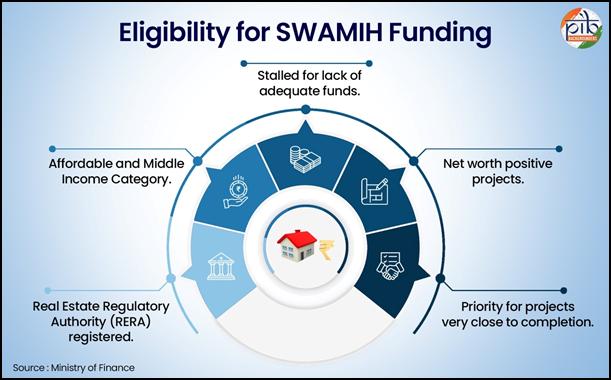
Projects considered for funding under SWAMIH must meet the following eligibility criteria:
1. Stalled Due to Lack of Adequate Funds
Only those projects that have been stalled or delayed mainly because of insufficient funding are eligible for SWAMIH support.
2.Real Estate Regulatory Authority (RERA)-Registered Projects
All projects seeking SWAMIH funding must be registered under the Real Estate Regulatory Authority.
3. Affordable and Middle-Income Housing Category
Eligible projects must fall under the affordable housing or middle-income housing segments, which are defined as any housing units that do not exceed 200 sqm RERA carpet area and are priced as follows (as applicable):
4. Net Worth Positive Projects
Projects must be net worth positive, meaning those projects where the value of receivables plus the value of unsold inventory is greater than the completion cost and outstanding liabilities at the project-level.
5. Priority to Projects Nearing Completion
Priority is accorded to projects that are in advanced stages of construction and are close to completion.
To widen the scope of investments, projects classified as Non-Performing Assets (NPAs) as well as those under proceedings before the National Company Law Tribunal (NCLT)are also eligible for consideration. All funding applications are examined by the Fund’s Investment Committee after detailed due diligence and consultations with existing lenders and legal advisors. Projects undergoing the corporate insolvency resolution process before the NCLT are eligible for funding until the resolution plan is approved or rejected by the Committee of Creditors.
Milestones and Implementation: What SWAMIH Has Achieved
Over the years, the Fund has demonstrated steady progress in reviving pending housing projects while maintaining a strong balance between social outcomes and financial discipline. Through robust governance, active asset management, and close oversight, it has delivered large-scale impact across housing, employment, and economic activity nationwide.
SWAMIH in Action: Delivering Homes, Restoring Confidence
SWAMIH’s impact is most clearly demonstrated through projects that transitioned from prolonged delays to timely completion, delivering homes to thousands of families while ensuring financial discipline and market confidence. Some of these success stories are outlined below.
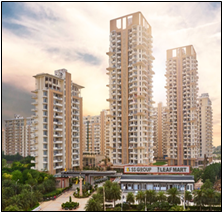
SS Leaf is a residential development in Gurgaon, comprising 670 units. Launched in 2012, the project was delayed by nearly five years due to cash-flow mismatches and the Non-Banking Financial Company (NBFC) crisis.
SWAMIH invested in September 2020 to enable rapid completion. The project received full Occupancy Certificate by June 2022.
Impact and Outcomes
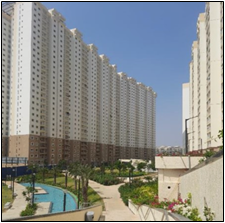
Mantri Serenity is a large mid-income residential development located in Bengaluru, comprising approximately 1,800 housing units. Launched in 2011, the project faced delays of nearly three to four years due to funding constraints, slower sales, and weakened cash flows.
SWAMIH invested in the project in September 2020 to support completion. Despite pandemic-related disruptions, the project progressed steadily under close monitoring.
Impact and Outcomes
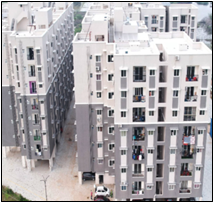
Elite Acres is a residential project located in Chennai, with 249 units. Launched in 2017, the project faced delays exceeding two years due to approval delays, the NBFC crisis, and its loan turning NPA.
SWAMIH invested in July 2020 to support completion and stabilise the project.
Impact and Outcomes
The Next Chapter: SWAMIH Fund 2
With thousands of homes delivered and construction activity revived across multiple cities, the demand for timely housing delivery continues. SWAMIH Fund–2, announced in Budget 2025-26, represents the next phase of intervention, focused on accelerating project completion across the country. The new fund will operate as a blended finance facility with contributions from the Government, banks, and private investors. With a proposed corpus of ₹15,000 crore, SWAMIH Fund–2 is aimed at the expeditious completion of an additional 1 lakh units, reinforcing the commitment to homebuyers, housing sector revival, and inclusive urban development.
Conclusion: SWAMIH’s Role in India’s Housing Future
More than just a financing vehicle, SWAMIH represents a targeted policy instrument that bridges financial markets, regulatory frameworks, and social needs. Through structured debt financing, strict eligibility measures, and professional fund management, the initiative has delivered tangible results: completed homes, resumed construction activity, and restored faith among homebuyers. As SWAMIH Fund 2 is rolled out, the Government of India continues to strengthen its commitment to Affordable and Mid-Income Housing, using sophisticated policy tools to address structural challenges in one of the country’s most essential sectors.
References
Ministry of Finance
https://dea.gov.in/our-organizations/investment-digital-economy-divison
https://financialservices.gov.in/beta/sites/default/files/2025-02/Budget.pdf
https://dea.gov.in/statistics-graphs
https://www.pib.gov.in/Pressreleaseshare.aspx?PRID=1590799
https://www.pib.gov.in/PressReleasePage.aspx?PRID=2212593
https://static.pib.gov.in/WriteReadData/specificdocs/documents/2023/mar/doc2023310168601.pdf
https://www.pib.gov.in/PressNoteDetails.aspx?NoteId=151332
https://www.pib.gov.in/PressReleseDetail.aspx?PRID=1911270
Ministry of Housing and Urban Affairs
https://pmaymis.gov.in/pmaymis2_2024/PMAY-urban-2.html
Others
https://sbiventures.co.in/funds-managed/swamih-investment-fund/