Naari Leads Swachhata
Naari Leads Swachhata
On International Women’s Day, women stepped forward to lead the charge for cleanliness and sustainability through the Naari Leads Swachhata initiative under the Swachh Bharat Mission – Urban 2.0. Women from diverse communities led awareness drives, cleanliness activities, and community engagement, showing how empowered women can spark lasting change. Here are inspiring stories from different ULBs highlighting local changemakers driving the swachhata movement.
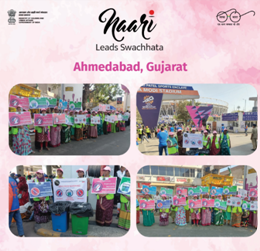
In Ahmedabad, more than 100 women sanitation champions from the Ahmedabad Municipal Corporation led a powerful behaviour change awareness drive at the iconic Narendra Modi Stadium ahead of the T20 World Cup final. As thousands of cricket fans gathered for the big match, these women engaged spectators with friendly conversations, placards, and on-ground guidance, encouraging them to use dustbins and avoid littering. Moving through the bustling entrances, concourses, and stands, they reminded fans that celebrating cricket also meant taking responsibility for keeping the stadium and city clean, turning the high-energy sporting event into an opportunity to inspire civic pride and responsible behaviour.
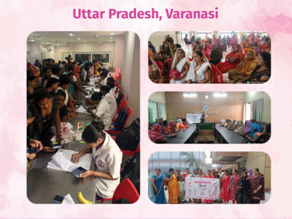
Varanasi Nagar Nigam, in partnership with the district Health Department of Uttar Pradesh, launched a dedicated Breast Cancer Screening Camp for SafaiMitras and women across the district, turning a routine health initiative into a mission of care and awareness. From early morning, women stepped forward to get screened, many for the first time, encouraged by the message that early detection can save lives. With a target of reaching more than 10,000 screenings, the campaign carried a simple yet powerful goal, catch it early, care deeply, ensuring that the women who work tirelessly for their communities also receive the attention, protection, and healthcare they deserve.
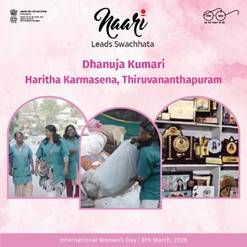
In Thiruvananthapuram, Dhanuja Kumari of the Haritha Karmasena turned her life’s struggles and courage into an autobiography titled My Life in Chenkalcoolayil. Through her journey, she not only championed sanitation work but also stood firmly against social evils and stigma, transforming personal hardship into a message of dignity and resilience. Today, her powerful story has travelled far beyond her neighbourhood, so much so that it is now studied by students at University of Calicut and Kannur University, inspiring a new generation with the voice of a woman who proved that change often begins with courage at the grassroots.
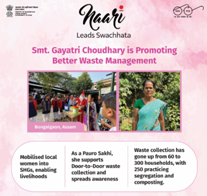
In Bongaigaon, a quiet but powerful change is being led by Pauro Sakhi Gayatri Choudhary under Swachh Bharat Mission – Urban Assam, proving a simple truth – when Naari leads, Swachhata follows. With determination and a deep sense of responsibility towards her community, Gayatri has been inspiring households to adopt better sanitation habits and embrace a Swachh Aadat in everyday life. Her journey, rooted in purpose and pride, reflects how one woman’s commitment can spark collective action, turning awareness into lasting change and bringing the vision of a Swachh Bharat closer to reality.
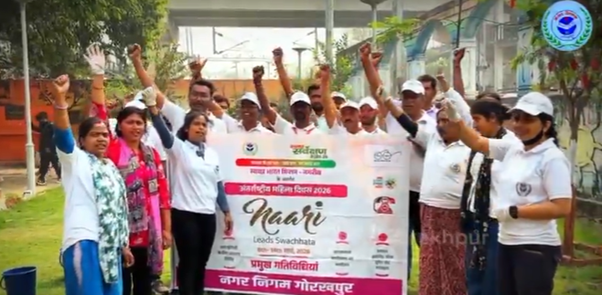
At the historic Surajkund Pokhra, a powerful Swachhata Maha-Abhiyan brought the community together with a shared purpose, to protect their environment and keep their surroundings clean. Women from the locality, along with Swachhata brand ambassador Nisha Kinnar and volunteers from several NGOs, actively participated in the drive, working side by side to collect plastic waste scattered around the pond premises. Their collective effort resulted in the collection of nearly 160 kilograms of plastic waste, which was carefully sent for scientific disposal.
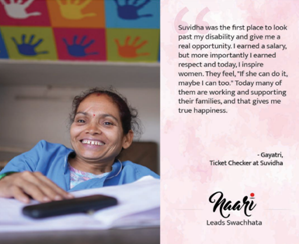
Under Swachh Bharat Mission – Urban, women across communities are shaping Swachh Aadat and strengthening the movement for a Swachh Bharat, and Gayatri’s journey is a powerful example of this change. At the heart of her story is Suvidha Centre by Hindustan Unilever, a gender-responsive community sanitation model that focuses on toilets for all while placing women’s needs, safety, and dignity at the centre. Through clean and secure sanitation spaces, women-led operations, and a supportive environment, Gayatri found not just access to better facilities but also a sense of confidence and leadership. Her story reflects how thoughtful sanitation solutions can empower women, inspire healthier habits, and bring communities closer.
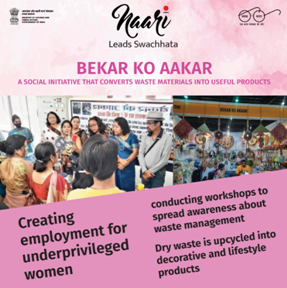
A powerful story of Naari-led Swachhata emerges from Jhansi in Uttar Pradesh, where a group of determined women are transforming “Bekar” into “Aakar” by turning waste into something wonderful. Through their dedication and creativity, materials once seen as useless are now being repurposed into valuable products, proving that sustainability and livelihood can go hand in hand. Their inspiring efforts not only reduce waste but also encourage communities to adopt better habits.
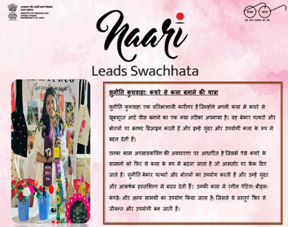
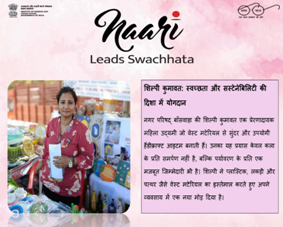
In Rajasthan, Suniti Kushwaha and Shilpi Kumawat are setting a remarkable example of Naari leading Swachhata by transforming the way communities view waste. Through their inspiring Waste To Art initiative, materials once discarded as trash are reimagined into creative works of art, proving that waste can hold new value when seen with imagination and purpose. Their efforts not only reduce waste but also spread awareness about responsible disposal and recycling, making them active contributors to effective solid waste management while inspiring others to adopt #SwachhAadat and move closer to the vision of Swachh Bharat.