DDWS organises Fourth Edition of multilingual Sujal Gram Samvad with 6 GP-headquartering villages across 5 States & 1 UT in their local language
DDWS organises Fourth Edition of multilingual Sujal Gram Samvad with 6 GP-headquartering villages across 5 States & 1 UT in their local language
The Department of Drinking Water & Sanitation (DDWS), Ministry of Jal Shakti, successfully organised the fourth Edition of ‘Sujal Gram Samvad’ today, reinforcing the Government of India’s commitment to participatory water governance and community-led implementation of Jal Jeevan Mission (JJM).
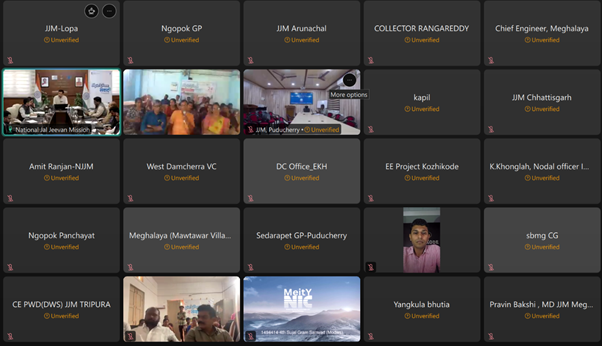
The virtual interaction brought together Gram Panchayat representatives, Village Water and Sanitation Committee members, community participants, women SHGs, students and frontline functionaries, along with State Mission directors of JJM, District Collectors/District Magistrates/Deputy Commissioners, DWSM officials, and senior officers from States and Union Territories.
The fourth edition of Sujal Gram Samvad featured village‑level interactions across 6 Gram Panchayat headquarter villages. The initiative recorded participation of around2,000 attendees, reflecting strong engagement from both communities and officials. In addition, villagers participated in large numbers at the Gram Panchayat level, including women, children, youth, and elderly community membersresulting in collective participation that extended well beyond the registered count.
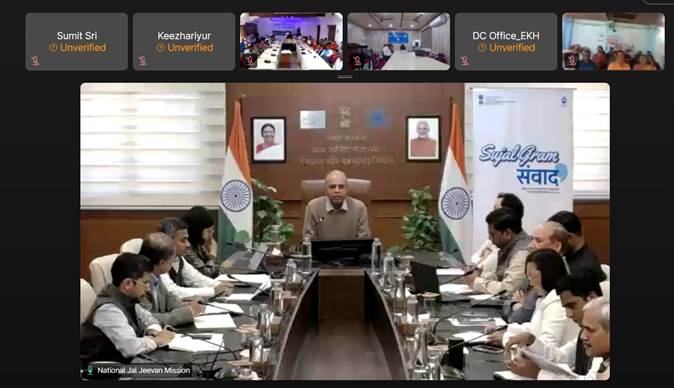
Shri Ashok K.K. Meena, Secretary, DDWS in his opening remarkemphasized that while JJM has focused on creating drinking water infrastructure across rural India, the next most critical phase is ensuring the sustainability of these systems. Once the physical infrastructure is in place, the real responsibility lies in guaranteeing the regular supply of drinking water to households through strong operation and maintenance mechanisms. Sustained service delivery must now become the central priority.
He underlined that water supply management is fundamentally a local responsibility and highlighted the important role of Gram Panchayats, and VWSCs in taking ownership of the schemes. Going forward, greater emphasis will be placed on transferring water supply systems to Gram Panchayats so that they operate and manage them with full ownership. To support this transition, institutional systems including District Technical Units (DTUs) will be strengthened to provide necessary technical and operational assistance.
He also drew attention to the importance of transparency and accountability through the Jal Seva Aankalan, under which Gram Panchayats present water service details before the Gram Sabha annually. He shared that a significant number of Gram Panchayats have already completed this exercise, and efforts are underway to ensure that the remaining Panchayats also conduct it in the coming period.
He further informed that a nationwide Jal Mahotsav will be held from 8–22 March, beginning on International Women’s Day and concluding on World Water Day. The campaign will focus on:
· Formal handover of water supply assets to Gram Panchayats through Jal Arpan Diwas
· Strengthening water quality testing and monitoring
· Institutional capacity building at village and district levels
· Ensuring safe drinking water through community participation
He called for active participation in the Jal Mahotsav to ensure sustainable, community‑led water governance in every village.
Voices from the Ground
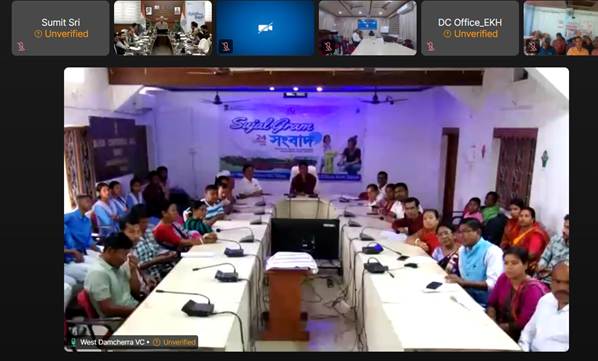
The Samvad began with an interaction with the community in West Damcherra, North Tripura, where VWSC members, ASHA workers, AWWs, pump operators, FTK-trained women, and other community representatives shared their experiences in Bengali. They highlighted that before JJM, they relied on unfiltered sources like hill streams and seasonal water bodies, leading to scarcity and waterborne diseases.
The community said, the provision of household tap connections under JJM,has significantly improved their daily life, particularly for women who no longer need to travel long distances to fetch water. Regular water supply, along with frequent water quality testing, has led to a noticeable reduction in diarrhoea and related illnesses among children.
The community also shared that the Jal Seva Aankalan has been completed, wherepipeline leakages were addressed promptly by the technical team, with normal water supply restored without delay, reflecting the efficiency of the local maintenance and monitoring system.
They added that greywater is being managed effectively through household and community soak pits, contributing to a cleaner village environment.
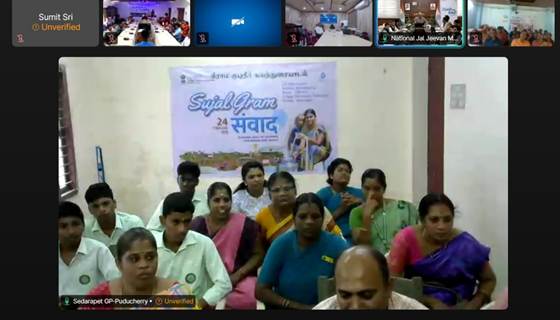
The community members of Sederapet, spoke in Tamilwith DDWS official and shared that it has achieved 100% Functional Household Tap Connections (FHTCs), ensuring assured quality water supply to all 1,248 households, covering a population of nearly 6,700. The drinking water supply system is fully operational and functioning efficiently.
The Panchayat has established a robust water infrastructure comprising a 5,000‑litre overhead tank, seven borewells, and 24 functional distribution connections, which are monitored regularly to ensure uninterrupted service. Daily operations are managed by designated pump operators at the Panchayat level.
Periodic water quality testing is carried out to ensure that all households receive safe and potable drinking water. A responsive grievance‑redressal mechanism is also in place.
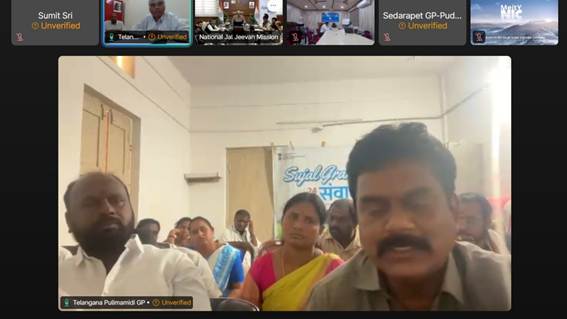
During the interaction with DDWS officials, villagers from Pulimamidi, Telangana, speaking in the local Telugu dialect, shared that the Gram Panchayat has achieved 100% tap water coverage across all households, schools, and Anganwadi Centres, with regular supply of safe and quality drinking water. They informed that both Jal Arpan and Jal Seva Aankalan activities have been completed in the village, and preparations are underway to conduct the Jal Arpan ceremony during the forthcoming Jal Mahotsav. The community also highlighted that schools and Anganwadi Centres are equipped with tap connections in toilets and handwashing stations, ensuring better hygiene facilities for children. Regular field‑level water quality testing is being carried out to ensure that the water supplied remains potable and safe for all.
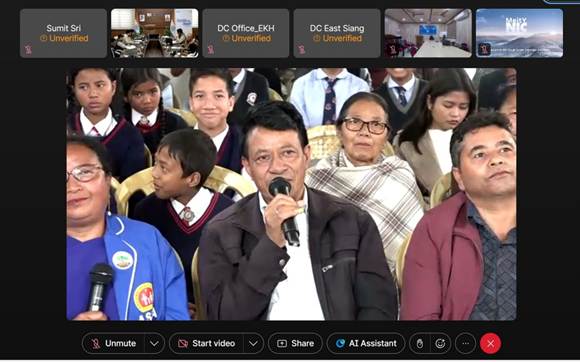
Community from Ngopok shared in local Adi language with DoWR official, and shared works under JJM have been fully completed, enabling clean and potable drinking water to all 330 households across five habitations through a gravity-based water supply system. Ngopok has become the first Panchayat in the district to ensure regular and reliable water supply 24X7. The Panchayat highlighted strong community-led operation and maintenance, with a well‑functioning VWSC, trained “Nal Jal Mitras”, and ten skilled women handling routine water quality testing. The village is also Har Ghar Jal certified.
The community informed that regular IEC activities, user charge collection with proper registers, and door‑to‑door awareness have ensured sustainability of the water system. A monthly tariff of ₹50 per household, approved in the Gram Sabhaand ₹200 for commercial establishments supports O&M needs. Community participation remains high, with involvement in Swachhata Shramdaan, upkeep of storage tanks, and protection of source areas. Strict penalties for littering near the Water Treatment Plant and routine source visits reflect the Panchayat’s commitment to safeguarding the water system and ensuring long-term sustainability.
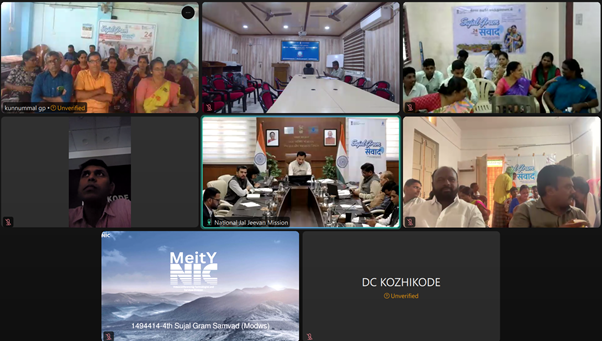
Speaking in English Sarpanch of Mawtawar sharedthat providing water in hilly and high‑altitude regions had long been considered extremely challenging. Prior to JJM, villagersparticularly womenspent 1-3 hours daily fetching water from rivers and wells, often standing in long queues during dry seasons. With the implementation of JJM, elevated storage tanks have been constructed to facilitate gravity‑based distribution, enabling regular tap water supply to every household. The community noted substantial improvements in daily life, including reduced physical burden, time savings and greater dignity and convenience, especially for women.
The village leadership highlighted that water quality assurance has become an integral part of service delivery. Water is tested at least three times a year by trained four women, ASHAs and AWW. The VWSC plays a proactive role in distribution management, quality monitoring, awareness campaigns and grievance redressal. Minor issues such as leakages are resolved locally, while major concerns are promptly reported to the PHED, reflecting strong community ownership and an effective rural water governance system.
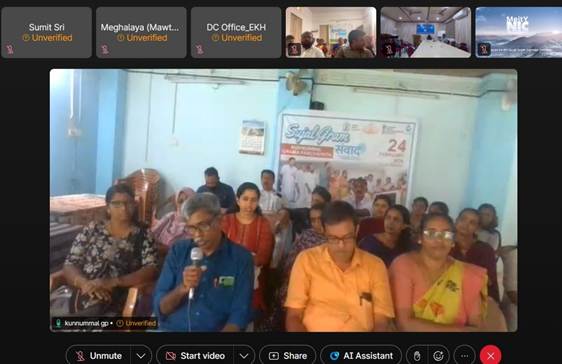
From Kunnummal Grama Panchayat in Kozhikode district, Kerala, elected representatives and beneficiaries of JJM shared their experiences in Malayalam. They highlighted that before the Mission, the Panchayat relied on tanker water during the summer months. With the implementation of JJM, households now receive clean drinking water throughout the year, and the Panchayat has effectively achieved self‑sufficiency with 24×7 water supply. Community members also informed that the Panchayat has a trained group of local volunteers who carry out timely water quality testing, ensuring safety and reliability of the drinking water being supplied.
The Sub Collector of Kozhikode district also joined the interaction and explained the WhatsApp‑based monitoring system being used across the district for tracking water supply and service requirements in real time. He noted that proactive efforts are underway to declare more Panchayats as Har Ghar Jal‑certified Panchayats, reflecting Kerala’s commitment to ensuring universal access to safe drinking water and strengthening local‑level service delivery mechanisms.
In his concluding remark and wayforward, AS & MD, NJJM, Shri Kamal Kishore Soan, appreciated the detailed presentation and acknowledged the comprehensive efforts undertaken by the Panchayat and district authorities. He commended the participatory approach, the integration of awareness initiatives such as Jal Jeevan Clubs, and the establishment of responsive grievance mechanisms.
He emphasized that the platform is not only meant to showcase good practices but also to openly discuss challenges so that they can be collectively addressed and improved upon. He also highlighted the upcoming Jal Mahotsav (8–22 March), encouraging Gram Panchayats to actively participate and use the occasion to strengthen community ownership, institutionalize water service delivery, and further enhance water quality monitoring efforts.
He encouraged continued efforts to expand such best practices and bring more Panchayats on board, so that similar models of transparency, community engagement, and accountability can be replicated in other regions.
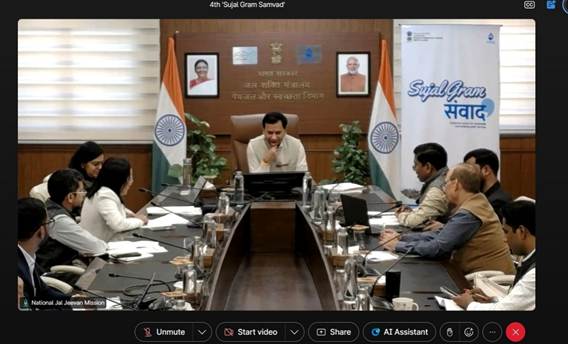
The programme began with Dr. Ankita Chakraborty, Deputy Secretary, NJJM, welcoming all participants and briefly explaining the purpose of the Fourth Edition of Sujal Gram Samvad.Shri Y.K Singh, Director, NJJM proposed the vote of thanks, marking the successful conclusion of the programme.
The full interaction of the fourth edition can be viewed at:
Ministry of Jal Shakti | Webcast Services of National Informatics Centre, Government of India
- West Damcherra, North Tripura, Tripura