ICDS 2026 Plenary Session Highlights Global Perspectives on Dam Safety and Water Governance
ICDS 2026 Plenary Session Highlights Global Perspectives on Dam Safety and Water Governance
The International Conference on Dam Safety (ICDS) 2026 commenced on a successful and high note with the inauguration by Shri Siddaramaiah, Chief Minister of Karnataka. The function was presided over by Shri D.K. Shivakumar, Deputy Chief Minister of Karnataka. Shri C. R. Patil, Union Minister of Jal Shakti addressed the gathering in a video message. The session was marked by the presence of Chief Guest, Shri Raj Bhushan Choudary, Union Minister of State for Ministry of Jal Shakti; Shri T.B. Jayachandra, MLA, Karnataka and Special Representative of Govt. of Karnataka in New Delhi; Mr. Johannes Zutt, Regional VP South Asia, World Bank; Shri D. K. Sharma President of International Commission on Large Dams (ICOLD); Prof. Toshio Koike Executive Director – ICHRAM, Japan; Shri Anupam Prasad, Chairman, CWC; Prof. Satyam Suwas, Dean Mechanical Sciences, IISc Bengaluru; and Shri Subodh Yadav, IAS, Addl. Secretary Dept. of Water Resources, Ministry of Jal Shakti, Government of India.
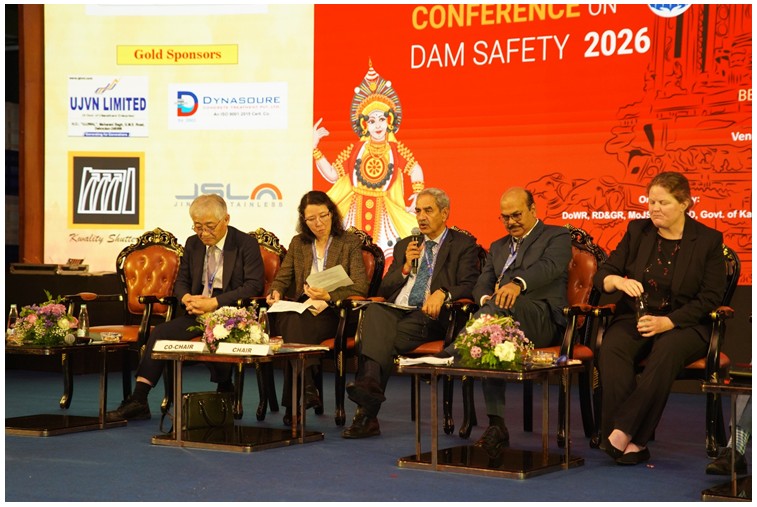
The session brought together senior policymakers, technical experts, and international representatives, underscoring the collective commitment to strengthening dam safety frameworks, enhancing institutional capacities, and addressing emerging challenges such as climate variability and infrastructure resilience.
The inaugural session was followed by a plenary session, bringing together senior policymakers, regulators and domain experts to deliberate on emerging challenges, priorities and the way forward for strengthening dam safety practices in the country. The session was chaired by Shri D. K. Sharma, President, International Commission on Large Dams (ICOLD) and co-chaired by Dr. Dina Umali, Regional Practice Director, Planets, South Asia, World Bank. Presenters at the session were Mr. Ed Jager, Minister (Commercial), High Commission of Canada, Shri Anupam Prasad, Chairman, Central Water Commission (CWC), Prof. Toshio Koike, Executive Director, International Centre for Water Hazard and Risk Management (ICHARM), Japan, Ms. Eileen Burke, Global Lead for Water Resources, World Bank, Mr. Deepak Kapoor, IAS, Additional Chief Secretary, Water Resources Department, Government of Maharashtra, and Dr. P. Somasekhar Rao, Director (Technical), Advanced Centre for Integrated Water Resources Management (ACIWRM), Government of Karnataka.
The session featured an engaging and substantive discussion that brought together diverse national and international perspectives on dam safety. The discussion also drew extensively on the experience of the Dam Rehabilitation and Improvement Project (DRIP), which was highlighted as a flagship initiative of the Government of India for strengthening dam safety across the country. Speakers noted that DRIP has played a pivotal role in improving the structural and operational safety of dams, enhancing institutional capacities, and mainstreaming risk-informed decision-making, including climate resilience considerations. The project’s outcomes and lessons were cited as valuable not only for Indian States but also for other countries seeking to modernise their dam safety practices through systematic rehabilitation and capacity-building.
Concluding the session, Dr. Dina Unali summarised the discussion with key takeaways. These included that the experience gained under the Dam Rehabilitation and Improvement Project (DRIP) across Indian States has generated valuable lessons for the global dam safety community. Innovations in dam rehabilitation, strengthening of the regulatory framework through the Dam Safety Act, 2021, and sustained international collaboration have been central to this progress. The Government of India’s focus on institutional capacity-building in dam safety is benefiting not only Indian States but also partner countries, positioning India as a global lighthouse in dam safety practice.
The increasing climate variability and extreme hydrological events have further underscored the critical importance of dam safety. Coordinated operation of upstream and downstream reservoirs has emerged as an essential requirement for effective flood management and risk reduction in a changing climate.
The final takeaway was that greater emphasis is required on sustainability, as well as systematic operation and maintenance of dams. Poorly maintained dams face heightened risks of distress and failure, while deferred maintenance significantly increases lifecycle costs and safety risks. Exploring additional revenue streams—such as floating solar power generation, tourism, fisheries etc.—can support sustainable dam maintenance and long-term financial viability.
The plenary session underscored the importance of collective thinking and cross-institutional collaboration in advancing safe, resilient, and future-ready water infrastructure.
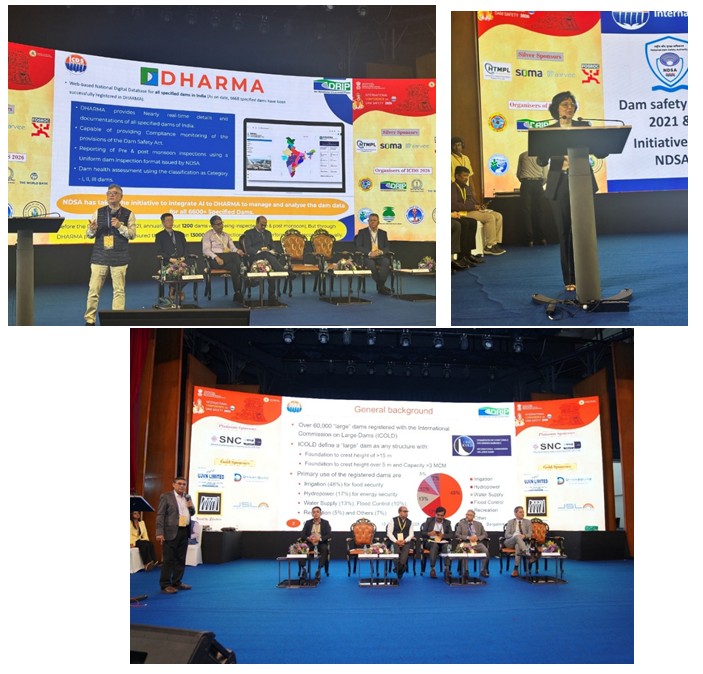
The Plenary Session was followed by Technical and Industrial Sessions on the theme of International and National Regulatory Frameworks for Dam Safety and Innovations in Structural Health Assessment of Dams and Rehabilitation Materials with the involvement of eminent national and international experts including experts from academia and industry.
The first day concluded with a vibrant cultural evening at Vidhan Soudha, Bengaluru which offered delegates a rich and immersive experience of Karnataka’s artistic heritage. Through captivating music, graceful dance performances, and traditional expressions, the evening celebrated the country’s cultural diversity while providing a relaxed and engaging platform for interaction among participants.