DDWS Conducts a Training of Master Trainers on Sujalam Bharat: Government Accelerates Digital Water Governance Through Sujal Gaon ID and District Technical Units
DDWS Conducts a Training of Master Trainers on Sujalam Bharat: Government Accelerates Digital Water Governance Through Sujal Gaon ID and District Technical Units
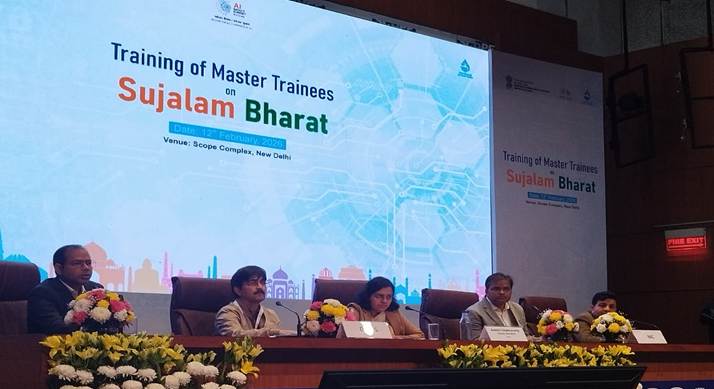
With over 81% of rural households covered under Jal Jeevan Mission (JJM), the focus of the Mission is progressively transitioning from infrastructure creation to standardized operation, maintenance, and monitoring of rural piped water supply systems. In this direction, the Department of Drinking Water and Sanitation (DDWS), Ministry of Jal Shakti, conducted a national-level Training of Master Trainers on the Sujalam Bharat Database and Mobile Application, along with a dedicated session on the District Technical Unit (DTU) framework, on 12 February 2026 at SCOPE Complex, New Delhi.
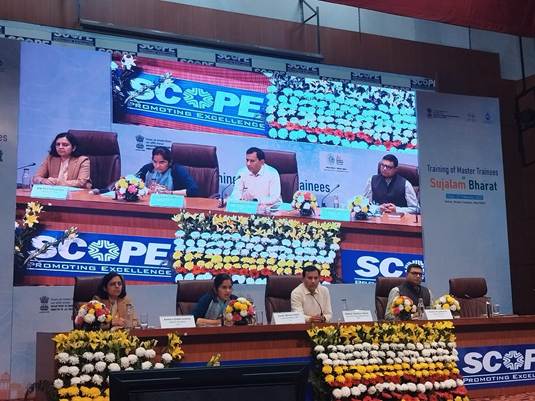
DDWS officials made a presentation on Sujalam Bharat Database (RPWSS module) and Mobile Application and informed that it provides an end-to-end, geo-tagged digital registry of rural water supply schemes—from source to household—forming a robust Digital Public Infrastructure foundation. Through scheme integration and the creation of Unique Sujalam Bharat/Sujal Gaon IDs, the platform consolidates infrastructure, operational, water quality, and service-related data, enabling improved transparency, accountability, and governance with active community participation.
Sujal Gaon ID: Building a Unified Digital Registry of Rural Water Supply Systems
The morning sessions focused on practical technical operational aspects of the RPWSS module, Sujal Gaon ID creation and Sujalam Bharat App. NIC officials, led the technical training on RPWSS ID generation, and navigated through the entire process of ID creation on JJM 2.0 dashboard, followed by an interactive Q&A session.
Subsequently a detailed training on the Sujalam Bharat Mobile Application was also held, covering geo-referencing procedures and integration of rural water supply assets onto the Sujalam Bharat platform. State/UTs actively participated in the discussions and sought clarifications on operational and technical aspects.
States have already initiated data entry in the module and geo-tagging of assets through the App, marking significant progress toward establishing a unified, GIS-linked digital asset registry of rural drinking water infrastructure.
District Technical Units: Transitioning to a Utility-Based, Service-Oriented Model
The afternoon session focused on the District Technical Unit (DTU) framework, which represents a strategic institutional reform under the extended phase of Jal Jeevan Mission. DDWS officials delivered a detailed presentation on DTU.
While the initial phase of JJM prioritized rapid infrastructure creation to achieve universal Household Tap Connections, the next phase emphasizes long-term functionality, sustainability, and reliable service delivery. The DTU is envisioned as the technical backbone of district-level rural water management, functioning as the extended technical arm of the District Water and Sanitation Mission (DWSM). The framework promotes convergence with relevant departments and expert institutions and supports professional technical oversight through PHED officials, water quality personnel, and technical consultants.
A key component of the DTU framework is the adoption of digital governance mechanisms, including integration of all rural water supply schemes into the Sujalam Bharat GIS-linked digital asset registry and lead Jal Seva Aankalan (JSA). The framework also encourages the use of digital tools such as Digital Twins, predictive analytics, and preventive maintenance strategies to enhance operational efficiency and reduce system failures. Shri Absar Khan, Team Leader, NPMU-PHE, NJJM, elaborated on the role and responsibilities of DTUs in Jal Seva Aankalan and provided a detailed walkthrough on the JSA format, followed by an interactive Q&A.
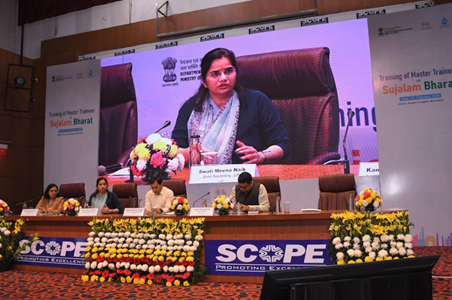
Speaking on the initiative, Smt. Swati Meena Naik, Joint Secretary (Water), DDWS emphasized that the Government is committed to ensure that no habitation is left behind as India advances toward a fully digitized and service‑efficient water infrastructure ecosystem. She highlighted that every habitation will be assigned a unique digital identity linked with LGD codes, forming the foundational ‘Mother ID for Sujal Gram ID’ for all schemes. This will enable precise advanced digital‑twin–based simulations at the state level using high‑performance DTU systems. By integrating physical and digital infrastructure, utilities will achieve higher standards of reliability, operational efficiency, and predictive maintenance. She underscored that this transformation will elevate service levels efficiency toward near‑100%, empowering engineers with cutting‑edge tools and significantly enhancing the nation’s capacity for transparent, data‑driven water service delivery.
The interactive session concluded with observations and wrap-up remarks by senior officials, reinforcing the importance of professionalized technical support systems at the district level.
Strengthening Institutional Capacity for Viksit Bharat 2047
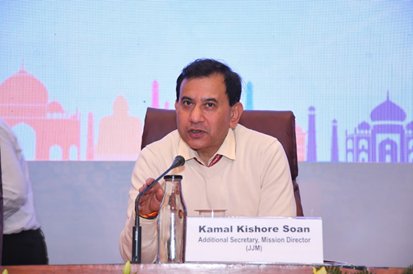
The programme concluded with closing remarks by Shri Kamal Kishore Soan, Additional Secretary & Mission Director, NJJM, DDWS, emphasized the importance of digital transparency, institutional strengthening, and service-level based Operation & Maintenance in ensuring sustainable rural water supply systems aligned with the vision of Viksit Bharat 2047. He shared, as JJM is focusing to strengthen digital water governance, it is essential that districts adopt a data‑driven approach across the entire source‑to‑tap service chain—whether dealing with pipeline shutdowns, inter‑scheme linkages, or financial reconciliation. Clear communication and timely correction of mapping, source details, and operational issues will ensure that every action is justified, transparent, and aligned with long‑term scheme health. By institutionalizing preventive systems and improving coordination between field teams and technical units, service disruptions can be reduced from source to household tap, thereby strengthening public trust in rural water supply services. He further informed that the officer in charge of the DTU would report to the District Collector, and that DTU performance and drinking water service delivery would be regularly reviewed in the monthly meetings.
He urged all master trainers to prepare and share the schedule of State down training, at least one training session to be conducted in February each in State, District and GP level.
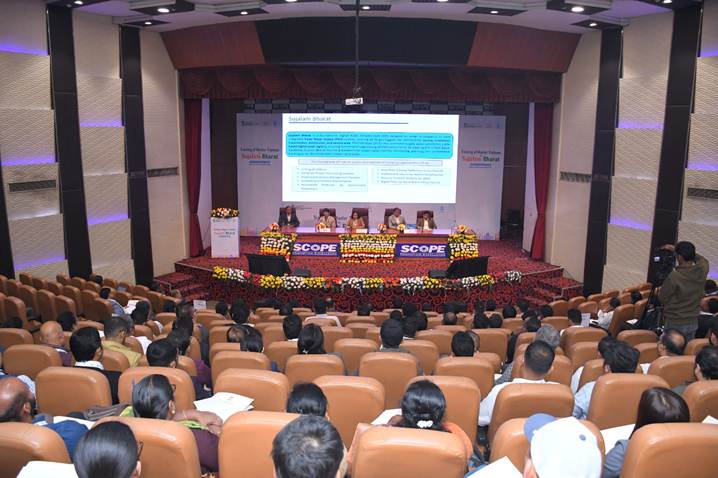
The ToT is attended by PHED Engineers, technical persons, consultants nominated from States and Union Territories, they will now act as Master Trainers and resource persons at State and District levels, ensuring wider dissemination and institutionalization of the knowledge gained during the training.
Through initiatives such as the Sujal Gaon ID and the District Technical Unit framework, the Department continues to reinforce digital governance, accountability, and long-term sustainability in rural drinking water service delivery across the country.